

What WordPress Is Meant to Do for Your Business
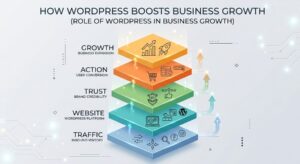
Before identifying problems, it is important to understand what your WordPress website should actually deliver.
At its core, your website should support your business, not slow it down.
It should help generate leads by guiding visitors toward clear actions. It should build credibility by presenting your brand professionally. It should support your marketing efforts by providing a strong destination for traffic.
It should also scale with your business. As your services expand or your audience grows, your website should be able to adapt without becoming difficult to manage.
When WordPress is set up properly, it can do all of this effectively.
When it is not, it becomes a bottleneck.
Common WordPress Issues That Hurt Business Growth
Many WordPress problems are not immediately obvious. They often sit beneath the surface, affecting performance, usability and visibility.
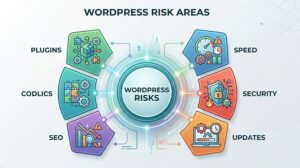
Here are the most common issues that directly impact business growth.
1. Slow Loading Speed
One of the most damaging issues is slow website speed.
This usually comes from heavy themes, unoptimised images or poorly configured hosting. Over time, additional plugins and content can make the problem worse.
For users, slow pages create frustration. Visitors expect websites to load quickly. If they do not, they leave.
For search engines, speed is also a ranking factor. Slower sites struggle to compete.
The result is reduced traffic and fewer conversions.
2. Plugin Overload
WordPress relies on plugins to add functionality. Used correctly, they are extremely useful.
The problem arises when too many plugins are installed without a clear strategy.
Each plugin adds weight and potential risk. Conflicts between plugins can break features or slow down the site. Some plugins may also become outdated or unsupported.
What starts as a flexible system can quickly become unstable.
3. Poor SEO Setup
Many WordPress websites are not structured properly for search engines.
This includes missing metadata, weak page hierarchy, poor internal linking and unoptimised content.
Even if the business offers strong services, poor SEO setup makes it harder for potential customers to find the website.
This limits long term growth and increases reliance on paid marketing.
4. Outdated Themes and Plugins
WordPress requires regular updates to stay secure and functional.
When themes and plugins are not updated, compatibility issues begin to appear. Features may stop working correctly. Security vulnerabilities may be exposed.
Ignoring updates can lead to larger problems over time, including downtime or data loss.
5. Weak Security
Security is often overlooked until something goes wrong.
Without proper protection, WordPress websites can become targets for attacks. This can result in hacked content, downtime or loss of customer trust.
For businesses, this is not just a technical issue. It directly affects reputation and reliability.
6. Poor Mobile Experience
A large portion of website traffic now comes from mobile devices.
If a WordPress site is not properly optimised for mobile, it creates friction. Text may be hard to read. Buttons may be difficult to tap. Layouts may break on smaller screens.
This leads to higher bounce rates and fewer enquiries.
7. Confusing Backend
Many business owners struggle to manage their own WordPress site.
This often comes from poor setup. Page builders, custom fields and plugins can create a backend that feels complicated and unclear.
If updating content becomes difficult, the website quickly becomes outdated.
8. Broken Layouts or Features
Over time, things can stop working.
A form may fail to submit. A layout may break after an update. A plugin may conflict with another.
These issues are not always obvious, but they create a poor experience for users.
9. No Clear Structure
Some WordPress websites grow without proper planning.
Pages are added over time without a clear structure. Navigation becomes cluttered. Users struggle to find what they need.
This affects both usability and SEO.
10. Lack of Ongoing Maintenance
Perhaps the most common issue is simply neglect.
WordPress websites require ongoing attention. Without maintenance, small issues accumulate and become larger problems.
A website that is not actively managed will gradually lose effectiveness.
How These Issues Impact Business Performance
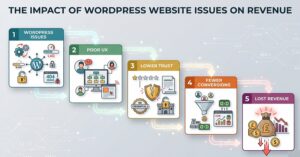
WordPress issues are not just technical problems. They have direct commercial consequences.
A slow website reduces engagement. Visitors leave before exploring your services. This means fewer opportunities to convert interest into enquiries.
Poor SEO structure limits visibility. Even if your business is strong, potential customers may never find you. Competitors with better optimisation take that traffic instead.
Weak user experience creates friction. Confusing navigation, broken elements or unclear messaging make it harder for users to take action.
Trust is also affected. Outdated design, security warnings or inconsistent performance can make your business appear unreliable.
Over time, these issues compound.
You may find yourself spending more on paid ads to compensate for poor organic visibility. You may invest in redesigns that do not fix the underlying problems. You may lose leads without understanding why.
What appears to be a website issue becomes a business growth issue.
Why These Problems Are So Common
Many businesses experience the same WordPress issues, and the reasons are usually consistent.
One of the main causes is DIY builds. While WordPress is accessible, building a website without a clear strategy often leads to structural problems.
Cheap development is another factor. Low cost builds may focus on appearance rather than performance, leaving important elements such as SEO and user experience underdeveloped.
Lack of strategy plays a major role. Without clear planning, websites grow in an unstructured way, which creates confusion for both users and search engines.
Ongoing support is often missing. Once a website is launched, it is left without regular updates or optimisation.
Finally, poor initial setup can create long term issues. Decisions made early in the build process affect how the website performs later.
These problems are common because they are not always visible immediately. They develop over time, which makes them easier to ignore.
How to Fix WordPress Issues Properly
Fixing WordPress problems requires more than quick adjustments. It requires a structured approach.
The first step is a proper audit. This involves reviewing performance, structure, SEO and usability to identify where the issues sit.
Once the problems are clear, unnecessary plugins should be removed. This reduces complexity and improves stability.
Speed optimisation is critical. This includes compressing images, improving hosting and refining how the site loads.
Structure should be improved to support both users and search engines. Clear navigation, logical page hierarchy and strong internal linking make a significant difference.
Updates and security should be handled consistently. Keeping the site protected and stable is essential for long term performance.
Most importantly, the website should align with business goals. Every change should support better user experience and stronger conversions.
Fixing WordPress properly is not about patching issues. It is about improving how the website functions as a whole.
WordPress Health Check Checklist
If you are unsure whether your WordPress website is performing as it should, a simple check can help identify potential issues.
- Is your website loading quickly on both desktop and mobile
- Does it provide a smooth experience on mobile devices
- Are plugins limited to what is actually necessary
- Is your SEO structure properly set up
- Can you easily update content without confusion
- Are all features working as expected
- Is your website secure and regularly updated
- Does the navigation feel clear and intuitive
- Are users guided toward clear calls to action
- Is your website supporting your business goals
If several of these areas raise concerns, it is likely that your website is not performing at its full potential.
How Design Hero Supports WordPress Websites
For many businesses, the challenge is not identifying that something is wrong. It is knowing how to fix it properly.
Design Hero approaches WordPress differently.
The focus starts with strategy. Understanding what the website should achieve ensures that every improvement is aligned with business goals.
Performance is prioritised. Speed, usability and structure are refined to create a smoother experience for users.
Conversion is a key consideration. The website is not just optimised to look better, but to guide visitors toward action.
Technical improvements are handled carefully. Plugins are managed properly, conflicts are resolved and the site is kept stable.
Ongoing support ensures that issues do not return. Instead of reacting to problems, the website is maintained proactively.
You also deal with one point of contact, which simplifies communication and avoids unnecessary complexity.
For businesses across Glasgow, Scotland and the wider UK, this approach provides clarity and confidence.
Conclusion
WordPress is a powerful platform, but only when it is used and maintained properly.
Many businesses experience slow performance, poor SEO and low conversions without realising that the website itself is the issue.
These problems rarely come from a single mistake. They build over time through small oversights, lack of maintenance and poor structure.
The good news is that they are fixable.
With the right approach, a WordPress website can become a strong asset that supports growth, improves visibility and increases enquiries.
The key is to move beyond surface level fixes and address the underlying issues.
If your website feels slow, difficult to manage or underperforming, it may be time to take a closer look.
Design Hero works with businesses across Scotland and the UK to identify and fix WordPress issues properly, ensuring websites deliver real results.
A well managed website should support your business, not hold it back.