

What Does a WordPress Consultant Actually Do?
Before diving into scenarios, it is worth clarifying the role.
A WordPress consultant is not just:
- A developer
- A designer
- A plugin installer
They typically help with:
- Website performance and structure
- Technical SEO foundations
- UX improvements
- Conversion optimisation
- Scalability and hosting decisions
- Plugin and system architecture
- Troubleshooting complex issues
In short, they step in when your website needs to perform as a business tool, not just exist online.
Scenario 1: Your Website Looks Fine but Is Not Generating Leads
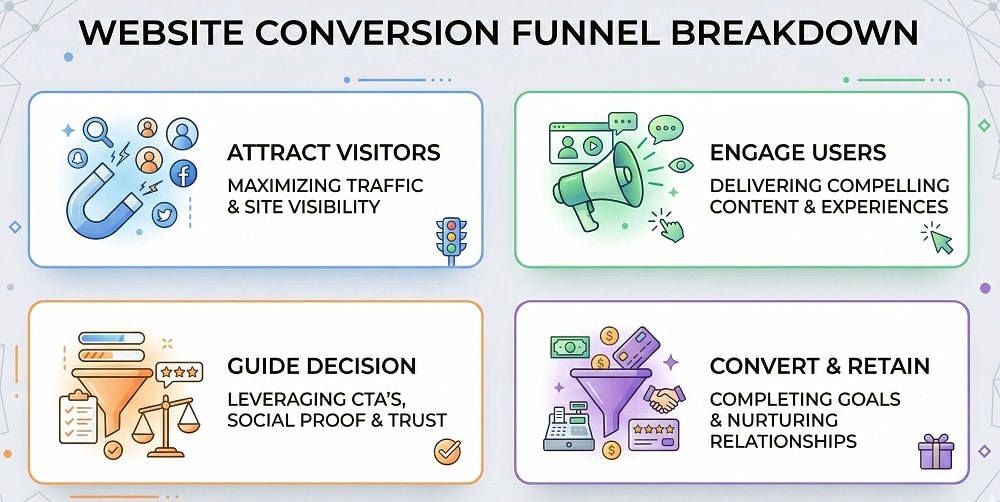
This is one of the most common situations.
You have a website. It looks professional. It loads. It functions.
But:
- Enquiries are low
- Conversion rates are poor
- Visitors do not engage
This is rarely a design issue alone.
It is usually a combination of:
- Weak page structure
- Poor user flow
- Lack of clear calls to action
- Content that does not guide decisions
A WordPress consultant can:
- Audit your page structure
- Improve user journey
- Redesign key conversion points
- Align design with business goals
This kind of issue often overlaps with broader website strategy problems discussed in the competition business guide, where structure directly impacts outcomes.
Scenario 2: Your Website Is Slow and Hurting Performance
Speed is not just a technical metric.
It directly affects:
- SEO rankings
- User experience
- Conversion rates
Common causes of slow WordPress sites:
- Poor hosting
- Too many plugins
- Unoptimised images
- Bloated themes
- Lack of caching
A WordPress consultant will:
- Diagnose performance bottlenecks
- Recommend better hosting
- Optimise assets
- Clean up unnecessary plugins
- Improve load times across devices
Performance improvements often lead to immediate gains in both SEO and conversions.
Scenario 3: Your SEO Is Not Working Despite Effort
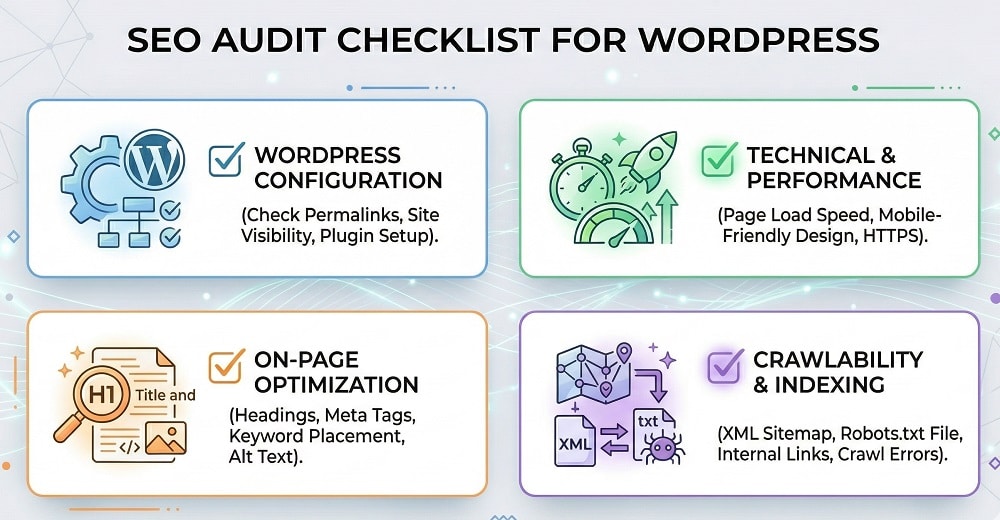
Many businesses invest in SEO but see little return.
Often the issue is not content. It is structure.
Problems include:
- Poor internal linking
- Weak page hierarchy
- Technical SEO issues
- Slow site performance
- Incorrect indexing
A consultant helps align your WordPress setup with SEO best practices.
This connects directly with foundational principles explained in SEO benefits, where structure and technical setup influence visibility.
Scenario 4: You Are Scaling Traffic and the Site Cannot Keep Up
Growth creates pressure.
As traffic increases, issues emerge:
- Slower load times
- Server crashes
- Checkout failures
- Plugin conflicts
This is common for:
- E-commerce sites
- Competition websites
- High-traffic service businesses
A WordPress consultant helps:
- Upgrade hosting infrastructure
- Optimise database performance
- Implement caching systems
- Improve scalability
Ignoring this stage often leads to lost revenue.
Scenario 5: Your Website Has Become Difficult to Manage
Many WordPress sites become messy over time.
Symptoms include:
- Too many plugins
- Confusing backend
- Broken features
- Slow updates
- Inconsistent design
This usually happens when multiple people work on the site without structure.
A consultant can:
- Simplify the system
- Remove unnecessary complexity
- Standardise components
- Improve maintainability
This reduces long-term cost and frustration.
Scenario 6: You Are Rebuilding or Redesigning Your Website
This is one of the most valuable times to involve a consultant.
Before redesigning, you should understand:
- What is currently working
- What is not converting
- What should be improved structurally
- What SEO value must be preserved
Without this, redesigns often lose rankings or fail to improve performance.
A consultant ensures:
- Strategy comes before design
- SEO is protected
- UX is improved
The rebuild solves real problems
Scenario 7: You Are Spending on Ads but Not Seeing ROI
Paid traffic magnifies website issues.
If your site does not convert, ads become expensive.
A WordPress consultant can:
- Audit landing pages
- Improve conversion flow
- Align messaging with intent
- Reduce friction
This often leads to lower acquisition costs and higher return on ad spend.
Scenario 8: You Need Custom Functionality or Integrations
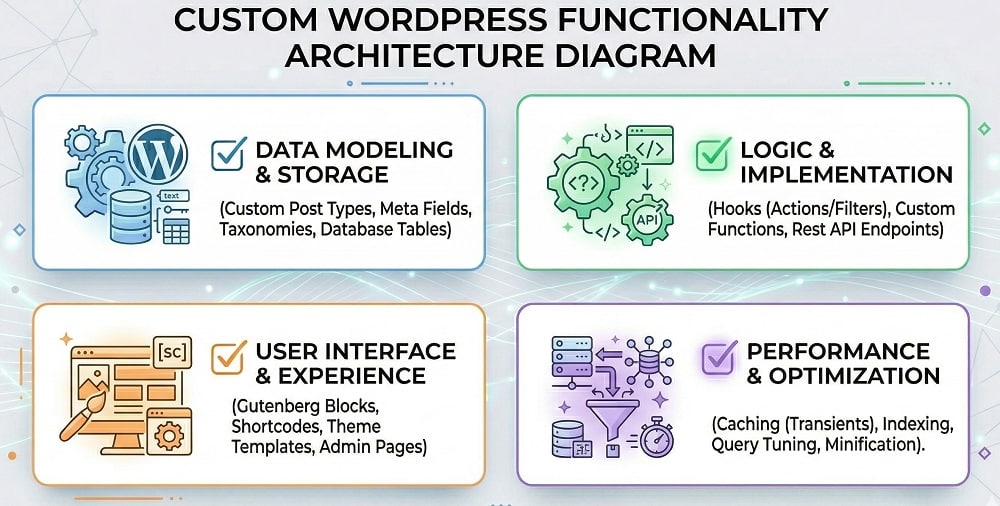
At some point, standard plugins are not enough.
Examples include:
- Custom booking systems
- Membership areas
- Competition platforms
- Advanced forms
- API integrations
A consultant helps:
- Plan architecture
- Avoid plugin conflicts
- Ensure scalability
- Maintain performance
Poor implementation here can break sites or create long-term issues.
Scenario 9: You Are Concerned About Security and Stability
Security becomes critical as your site grows.
Risks include:
- Malware
- Data breaches
- Plugin vulnerabilities
Weak hosting environments
A consultant can:
- Secure your setup
- Implement best practices
- Recommend reliable hosting
- Monitor vulnerabilities
Security issues can damage both reputation and revenue.
Scenario 10: You Want to Treat Your Website as a Growth Asset
This is the most important scenario.
When your website becomes central to:
- Lead generation
- Sales
- Brand positioning
- SEO strategy
It needs to be treated as an asset.
A WordPress consultant helps align:
- Design
- Performance
- SEO
- UX
- Content
Into one cohesive system.
When You Probably Do Not Need a WordPress Consultant?
To be balanced, not every situation requires one.
You may not need a consultant if:
- Your site is very small and static
- You are not relying on it for leads
- You are testing an early idea
- Budget is extremely limited
In these cases, a simple setup may be enough.
The Cost of Waiting Too Long
Many businesses delay bringing in expertise.
The result:
- Lost leads
- Poor rankings
- Wasted ad spend
- Expensive rebuilds
Fixing problems later is always more costly than structuring things correctly early.
Conclusion
You do not need a WordPress consultant to launch a basic site.
You need one when:
- Growth matters
- Performance matters
- SEO matters
- Conversion matters
The moment your website becomes more than a placeholder, expert input becomes valuable.
A consultant helps turn your WordPress site into a system that supports real business outcomes.
👉 Explore our WordPress consulting services: Book a Free Consultation
We help businesses:
- Improve performance
- Increase conversions
- Strengthen SEO foundations
- Build scalable WordPress systems
Your website should work for your business, not against it.