


Your Clients Search for Construction Companies Online First
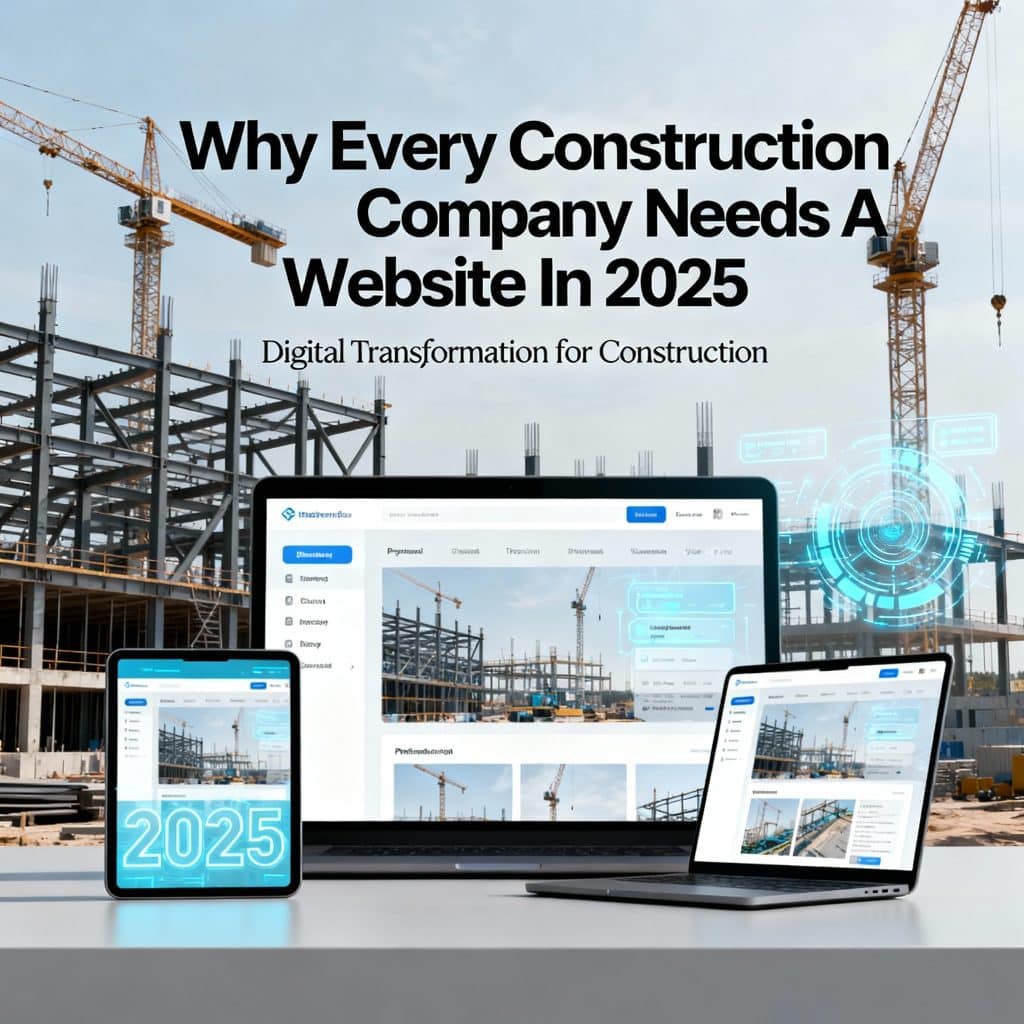
Your construction company cannot afford to remain invisible online in today’s competitive market. Small businesses have embraced digital platforms, and many already have websites. Without an online presence, your business risks losing potential projects to competitors who are easier to find.
Research suggests that a large proportion of B2B buyers search online for professional services and make purchasing decisions before contacting a provider. Local customers also use search engines to find businesses in their area. These trends highlight why a professional website is more than a nice addition to your construction business; it is an important part of your marketing strategy.
A website acts as your digital storefront around the clock, showcasing your services even when you are on site or unavailable to answer calls. Trust is an important part of the decision-making process, and a professional website can help establish credibility by displaying your portfolio, certifications and client testimonials. It serves as a digital portfolio that continues working while you focus on your projects.
Websites do more than make your business visible. They can help generate enquiries, provide insights into visitor behaviour and support your search engine optimisation strategy. A well-designed website can improve your visibility in relevant search results and help potential clients find the information they need before getting in touch.
First Impressions Matter: Build Trust with a Strong Website
Your construction company’s online presence can influence how potential clients perceive your business. Research from Stanford University’s Web Credibility Project highlights the role website design can play in how users assess a company’s credibility.
Why Is a Website Necessary for Credibility?
A well-designed construction website can help establish trust from the moment a visitor arrives. Professional presentation, clear information and accessible contact details can reassure potential clients that your business is legitimate and capable of delivering the services they need.
Your website should communicate your experience and professionalism quickly, particularly during the first few seconds of a visitor’s interaction. Clear messaging and a well-organised layout make it easier for users to understand your business and decide whether to explore your services further.
Build Trust and Credibility Through Certifications and Testimonials
Industry certifications, memberships and professional affiliations can help demonstrate your qualifications and experience. Displaying relevant credentials clearly on your website allows potential clients to find important information without having to request it separately.
Client testimonials provide another form of social proof. Genuine written or video testimonials can give prospective customers insight into the quality of your work, your communication and the experience of working with your company. Where possible, include specific feedback alongside relevant project details rather than relying on general statements about quality.
Showcase Your Portfolio with Detailed Project Case Studies
A strong project portfolio can turn completed work into compelling case studies. Rather than displaying photographs without context, explain the client’s requirements, the challenges involved, the work carried out and the outcome.
Detailed project pages can also support your SEO strategy by providing useful, relevant content for search engines and visitors. Our guide on lessons for building successful construction company websites explores how to structure a construction portfolio effectively.
You can also see this approach in our construction success stories, including our work with TTAG Construction.
Improve Search Engine Rankings with SEO
Search engine optimisation helps your construction business become more visible to people searching for relevant services. When your website is optimised for appropriate keywords and provides useful information, it has a stronger opportunity to appear in relevant search results.
Local visibility is particularly important for construction companies serving specific towns, cities or regions. Potential clients often search for contractors based on their location and the type of work they require. A well-structured website can support these searches by clearly communicating your services, service areas and experience.
Generate Local Leads and Attract More Clients
Building an online presence requires more than simply launching a website. Your construction company also needs to make that website visible to potential clients who are actively searching for your services.
How Does Local SEO Help Construction Companies?
Local SEO helps businesses reach people searching for services in a specific geographic area. This is particularly valuable for construction companies that work within defined service regions.
Our guides on how to rank your construction business locally and local marketing for construction businesses cover practical ways to improve your local visibility.
To strengthen your local search presence, claim and maintain your Google Business Profile. Make sure your business name, address and phone number are accurate and consistent across relevant online platforms. Your website should also provide clear information about the areas you serve and the services you offer.
Use Website Analytics to Track Performance
Tracking website performance helps you understand what is working and where improvements may be needed. Tools such as Google Search Console and Google Analytics can provide useful information about search visibility, website traffic and visitor behaviour.
Google Business Profile insights can also help you monitor interactions such as profile views, website visits, calls and direction requests. Reviewing this information regularly allows you to make more informed decisions about your SEO and marketing activity.
Provide 24/7 Access to Your Services and Contact Details
Your website acts as a digital storefront that remains available outside your normal working hours. Potential clients can review your services, explore previous projects and find your contact details whenever they need them.
Adding features such as quote request forms, enquiry forms or online scheduling can make it easier for visitors to take the next step. The process should be straightforward, particularly for people accessing your website from a mobile device.
Turn Your Website into a Lead Generation Tool

Turning website visitors into potential clients requires a combination of clear messaging, useful content and well-designed conversion features. Your website should make it easy for visitors to understand your services and contact your business when they are ready to take action.
Generate Leads with Contact Forms and Quote Requests
Your website should include a clear and easy-to-use contact form that captures the information you need to respond to enquiries. Keep the form straightforward and only request essential details, such as the visitor’s name, phone number, email address and the type of service they require.
Depending on your services, you may also want to include a file upload option so potential clients can share plans, photographs, specifications or other relevant documents. Use a specific call to action that explains what happens next, such as “Request a Quote” or “Discuss Your Project”, rather than relying on a generic “Submit” button.
Integrate Your Website with Email Marketing and Social Media
Email marketing can help construction businesses maintain communication with potential and existing clients. You can organise your audience based on factors such as client type, project stage and service interests, provided you collect and use their information appropriately.
Automated emails can be used for enquiry confirmations, follow-ups and relevant updates. Any email campaigns should be carefully planned, provide useful information and work effectively on mobile devices.
Use Content Marketing to Educate and Convert
Content marketing can help construction companies answer common customer questions, demonstrate industry knowledge and attract relevant visitors through search engines.
Useful content might include how-to guides, project case studies, behind-the-scenes updates and construction maintenance advice. Focus on the questions and challenges your target audience is likely to have, rather than producing content solely to include keywords.
Need help building a website with effective lead-generation features? Explore our construction website design service.
What the Best Construction Websites Actually Include
A construction website should do more than look professional. It needs to communicate the value of your services and give potential clients clear reasons to consider your business.
The strongest websites use benefit-led service descriptions that explain what clients can expect from working with the company. Instead of simply listing services, explain how your experience and approach can help clients manage their projects, reduce uncertainty and achieve their goals.
Your website should also communicate what differentiates your business from local competitors. Many construction websites use similar layouts and language, making it difficult for visitors to identify meaningful differences. A clear point of difference, supported by evidence, can help your business stand out.
Our guide to the best web design practices for construction companies explores these considerations in more detail. You can also review our guide to common construction industry website mistakes and our article on construction website design trends.
Support Long-Term Growth and Efficiency
A construction website can support more than marketing and lead generation. Depending on the needs of your business, it can also connect with other digital tools to improve communication, organisation and operational efficiency.
Integrate Your Website with CRM and Scheduling Tools
Connecting your website to a Customer Relationship Management system can help you organise client information and track interactions. A suitable CRM can make it easier to manage enquiries, monitor follow-ups and keep customer information in one place.
Scheduling software can also support the management of appointments, resources and project-related tasks. The right tools will depend on your business size, existing systems and operational requirements. Integration should be considered carefully to ensure that the technology genuinely saves time and improves your workflow.
Track Performance with Analytics
Website analytics can provide valuable insights into visitor behaviour and marketing performance. You can monitor metrics such as traffic sources, enquiry submissions, popular pages and conversion rates to understand how visitors interact with your website.
Construction companies may also use project-specific performance metrics to monitor budgets, schedules and productivity. Website analytics and project management data serve different purposes, but both can support more informed business decisions when used appropriately.
Mobile-friendly dashboards can make it easier to review relevant information while managing projects away from the office.
Ensure Mobile Responsiveness and Fast Loading Times
Mobile optimisation is an important part of modern website design. Potential clients may research your business using smartphones, so your website needs to be easy to navigate and read on smaller screens.
Responsive layouts, accessible forms, optimised images and reliable hosting can help improve the user experience. Google’s PageSpeed Insights tool can help you assess website performance and identify potential improvements.
Enhance Communication and Customer Experience
Clear communication is essential for successful construction projects. Your website can act as an important point of contact by making it easy for potential and existing clients to find information about your business.
Visitors should be able to access your contact details, project experience and service information without having to search through several pages.
Provide Clear and Accessible Contact Options
Your phone number and other contact details should be easy to find throughout the website. Placing contact information in the header, footer and relevant service pages can help visitors get in touch without unnecessary effort.
Contact forms should be simple to complete, work correctly on mobile devices and provide a clear confirmation after submission. An automatic response can reassure visitors that their enquiry has been received and explain when they can expect a reply.
Keeping your website content under your own control also gives you greater flexibility over how your business presents its services, contact details and completed projects. Unlike social media platforms, your website is not dependent on changes to another platform’s algorithm or terms of service.
Consider Project Management Features
For construction companies managing larger projects, client portals can provide a central location for sharing documents, updates and project information.
Depending on the needs of your business, a client portal may support milestone updates, document sharing and organised communication. These features can improve transparency and reduce the need to manage project information across multiple communication channels.
However, they should be introduced where they provide genuine value and where the necessary security and access controls are in place.
Support Cost-Efficient Business Growth
A well-designed website can support business growth by improving marketing efficiency, organising enquiries and connecting with relevant business systems. If you are assessing the investment involved, our guide to construction website cost provides further information about the factors that can influence the price of a website project.
Streamline Operations
Construction businesses can use digital tools to support project planning, resource allocation and financial administration. Depending on the systems you use, integrations may help organise information relating to expenses, invoicing, payments and project tasks.
Construction-specific software can improve visibility across different areas of the business, but it should be selected according to your actual requirements. The goal is to reduce unnecessary administrative work and support better decision-making rather than introduce technology for its own sake.
Measure Business Performance
Key performance indicators can help construction companies understand their financial and operational performance. Relevant measures may include cost variance, working capital, accounts receivable turnover, cash flow and labour productivity.
These metrics can help you assess project profitability, monitor financial health and identify potential problems early. Website analytics can complement this information by showing how effectively your online presence attracts visitors and generates enquiries.
Reviewing performance consistently allows construction businesses to make more informed decisions and identify opportunities for sustainable improvement.
Stand Out from Local Competitors
Construction companies often compete with businesses offering similar services in the same geographic area. Quality workmanship is important, but your website should also communicate what makes your business different.
Your unique selling proposition should explain the specific value you offer to clients. This might include specialist experience, relevant certifications, knowledge of complex building requirements, environmentally responsible practices or a particular approach to customer service.
A clear point of difference is most effective when it is supported by evidence. Use project examples, client testimonials and detailed service information to demonstrate how your business delivers on its promises.
Your website also gives you a central place to communicate your brand consistently. A clear message across your homepage, service pages and portfolio can help potential clients understand why they should consider your company.
Strong visuals and genuine testimonials can turn a basic online brochure into a more useful marketing tool. The key is to communicate what makes your business relevant to the customers you want to attract.
Support Customer Reviews and Testimonials
Customer reviews and testimonials can provide valuable social proof for construction companies. Potential clients often want reassurance about the quality of your work, your reliability and how you communicate throughout a project.
Your website provides a central location for showcasing genuine feedback from previous clients. Where appropriate, include testimonials alongside relevant project photographs or case studies so visitors can see the work being discussed.
Here are some ways to present customer feedback:
- Create a dedicated testimonials page featuring genuine client comments.
- Display relevant review badges from trusted platforms, where permitted.
- Include testimonials on service pages and near relevant calls to action.
- Pair client feedback with completed project photographs.
- Use case studies to explain the client’s requirements, your approach and the result.
You can also establish a consistent process for requesting feedback after completing projects. Responding professionally to both positive and negative reviews demonstrates that your business takes customer experience seriously.
Testimonials add a human element to your construction website and provide potential clients with evidence from people who have already worked with your company.
Data Security and Compliance Considerations
Construction companies may handle sensitive information, including architectural drawings, project plans, financial records and personal details relating to clients and employees. Protecting this information should be an important consideration when managing your website and associated digital systems.
If your business operates in the UK, you need to understand the data protection requirements that apply to the information you collect and process. The Information Commissioner’s Office guidance on UK GDPR is a useful starting point, although specialist advice may be necessary for your specific circumstances.
Website security measures may include regular updates, secure hosting, encryption where appropriate, multi-factor authentication and access controls. The measures you need will depend on the type of information your business handles and the systems connected to your website.
A professionally managed website with appropriate security controls can help reduce avoidable risks and demonstrate that your business takes the protection of client information seriously.
How Design Hero Helps Your Construction Company Build Its Online Presence
Building an effective construction website requires an understanding of both web design and the needs of your industry. Your website should communicate your experience, showcase your completed work and make it easy for potential clients to contact you.
Design Hero understands the importance of creating a professional online presence for construction businesses. Depending on your requirements, your website may include high-quality project galleries, clear service descriptions, enquiry forms and other features that support your marketing and customer experience.
Some construction businesses may benefit from additional functionality, such as project calculators, secure document-sharing areas or integrations with construction management software. The right features depend on your business model, audience and operational needs.
Our guide to construction website features and our article on designing construction websites that build trust explore these considerations in more detail.
When choosing a web development partner, look for someone who can understand your business, communicate clearly and demonstrate relevant experience. Your website should reflect your professionalism and make it easier for potential clients to understand the value of your services.
Ongoing maintenance and support are also important. Regular updates, security checks and content improvements can help keep your website functional, relevant and aligned with your business as it develops.