

Why This Needs to Be a Proper Buyer’s Guide?
Most articles about choosing a web designer are surface-level. They give generic advice like:
- Check reviews
- Look at portfolios
- Choose someone local
That advice does not protect you from a poor outcome.
Bad website decisions usually happen because:
- Business goals were never defined
- The designer focused on visuals instead of outcomes
- UX and structure were ignored
- SEO was treated as optional
- Mobile users were not prioritised
- The site was built for launch day, not long-term use
These problems are similar to what we see in other industries where websites underperform, including competition platforms and service businesses. Many of the underlying patterns are explained in 3 reasons raffle sites fail, even though the business models differ.
The lesson is the same. Websites fail when decisions are made without a clear strategy.
Step 1: Understand What a Website Designer’s Job Really Is
Before you compare designers, you need clarity on what you are actually buying.
A professional website designer should be responsible for:
- Structuring pages so users understand your business quickly
- Designing layouts that guide people towards action
- Supporting trust and credibility
- Making the site usable on mobile devices
- Working alongside SEO and content considerations
A website designer is not just:
- Someone who picks colours and fonts
- Someone who installs a theme
- Someone who follows trends without purpose
When designers operate only at a visual level, the site almost always underperforms. This is why many businesses end up rebuilding their website within a few years.
Step 2: Define the Job Your Website Needs to Do
Most buyers skip this step and pay for it later.
Before you speak to a single designer, you should be able to answer:
- Is this website meant to generate enquiries?
- Is it supporting local SEO in Aberdeen?
- Is it replacing part of the sales process?
- Is it educating prospects before they contact you?
- Does it need to scale beyond the local area?
A website built to rank locally needs a different structure to one built purely as a brochure. A site designed to generate leads needs different UX decisions to one focused on brand awareness.
Good designers ask these questions early. Poor ones do not.
Step 3: Local Knowledge in Aberdeen, Used the Right Way
There is genuine value in working with a website designer who understands Aberdeen.
Local knowledge helps with:
- Understanding how people search locally
- Recognising competitive industries in the area
- Structuring pages for local SEO
- Using language that fits the region
However, local alone is not enough.
Some designers rely heavily on proximity while lacking deeper UX, SEO, or conversion knowledge. That leads to websites that look acceptable but fail to perform.
The best Aberdeen website designers combine local awareness with strong digital fundamentals.
Step 4: How to Properly Evaluate a Website Designer’s Portfolio
Portfolios can be misleading.
A good-looking portfolio does not mean the websites perform well.
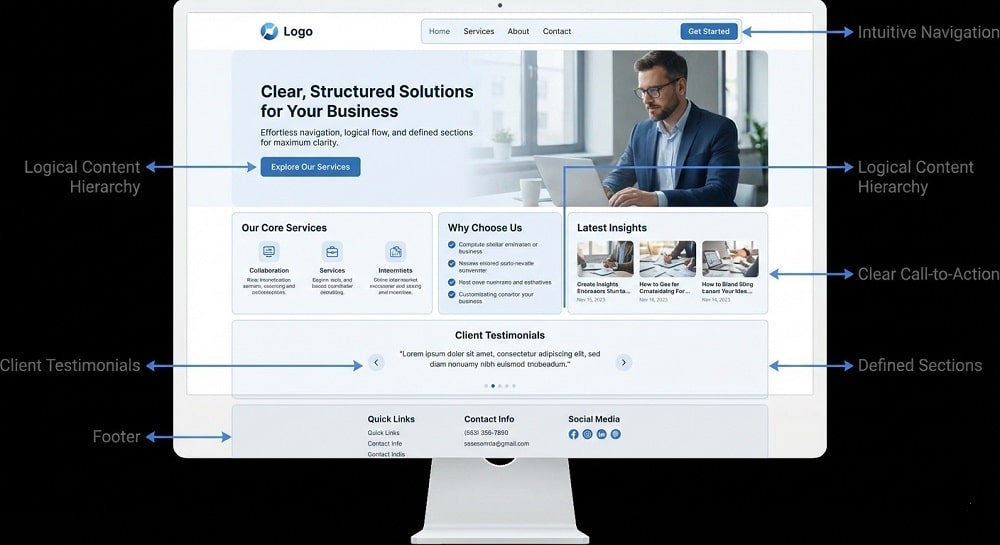
When reviewing a designer’s work, do more than glance at screenshots. You should:
- Visit the sites
- Test them on mobile
- Check load speed
- Read the content
- Try to understand the business quickly
Ask yourself:
- Is it obvious what the business does?
- Is the navigation intuitive?
- Is there a clear next step?
- Does the site feel trustworthy?
Then ask the designer:
- What problem was this site solving?
- What changed after launch?
- How was success measured?
Designers who can answer these questions tend to build better websites.
Step 5: UX Matters More Than Visual Style
User experience is what separates a website that looks good from one that works.
Strong UX includes:
- Clear hierarchy
- Logical page flow
- Predictable navigation
- Minimal friction
- Obvious calls to action
Poor UX usually shows up as:
- High bounce rates
- Low enquiry volume
- Confused users
- Poor engagement
This is a recurring issue across underperforming websites and mirrors patterns discussed in the competition business guide, where clarity and structure directly affect results.
Step 6: Mobile Design Is Where Most Websites Fail
For most Aberdeen businesses, mobile traffic now makes up the majority of visits.
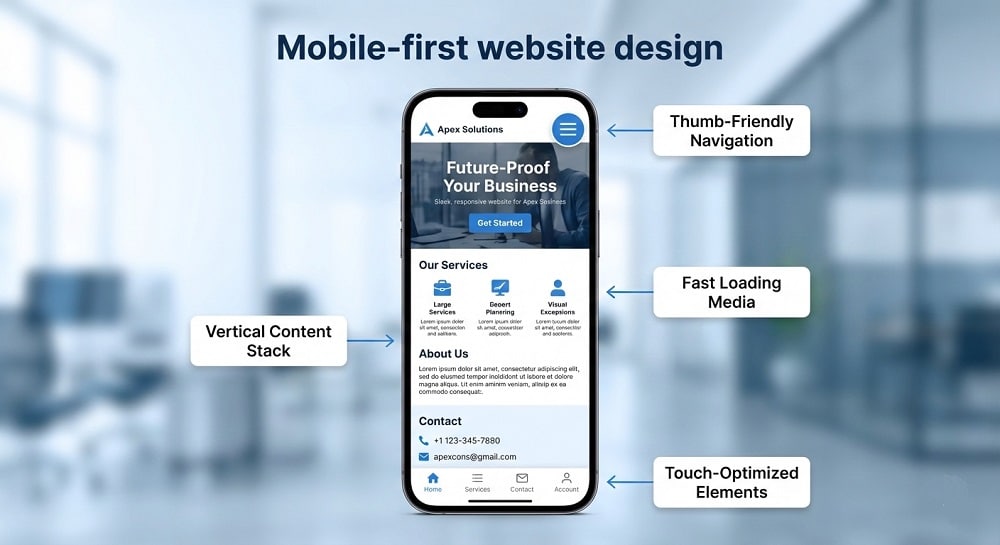
A good website designer should:
- Design mobile layouts intentionally
- Simplify content for small screens
- Make buttons and forms easy to use
- Prioritise speed and readability
If mobile design is treated as an afterthought, the site will struggle.
Step 7: SEO Awareness Separates Designers From Decorators
A designer does not need to be an SEO specialist, but they must understand how design affects visibility.
Design influences:
- Page speed
- Heading structure
- Content hierarchy
- Internal linking
- Crawlability
Designers who ignore SEO often create websites that look good but struggle to rank. This creates problems later when marketing efforts do not deliver results.
Good design supports the principles explained in SEO benefits and related resources in the business tips section.
Step 8: Content and Copy Are Part of Design
Design without content is decoration.
Strong designers understand:
- How users scan pages
- Where content should sit
- How much text is needed
- How to guide attention
Ask whether the designer:
- Helps structure content
- Reviews clarity and flow
- Understands messaging
If content is treated as an afterthought, the website will feel hollow.
Step 9: Early Warning Signs You Are Choosing the Wrong Designer
At this stage, you should be alert to red flags:
- No questions about your business goals
- Heavy reliance on templates
- Weak mobile examples
- Vague answers about SEO
- Focus on visuals only
- Unrealistic timelines
If something feels rushed or superficial, it usually is.
Step 10: Website Design Pricing in Aberdeen (What You Are Really Paying For)
Website design pricing in Aberdeen varies widely, and that variation causes confusion.
You will see quotes that range from a few hundred pounds to several thousand pounds for what appears to be the same thing. The reason is simple. You are not paying for pages or visuals. You are paying for thinking, structure, and experience.
Here is how pricing typically breaks down in the Aberdeen market.
Low-Cost Website Design (£500 to £1,000)
These projects usually involve:
- Pre-built templates
- Minimal planning or discovery
- Little to no UX strategy
- No SEO structure beyond basics
- Limited mobile optimisation
- Minimal post-launch support
These websites are often described as “starter sites”. The problem is that many businesses never outgrow them. They just replace them later.
Low-cost sites often look acceptable but fail to generate enquiries or rank in search. This leads to frustration and rebuilds.
Mid-Range Professional Websites (£1,500 to £3,000)
This is where most serious Aberdeen businesses should expect to invest.
At this level, you should expect:
- Custom layouts
- Clear page structure
- Mobile-first design
- Consideration for SEO foundations
- Guidance on content structure
- Proper UX thinking
- Launch support
This is the level where websites start to function as business tools rather than online brochures.
High-End Strategic Websites (£3,000+)
These projects are typically for businesses that:
- Compete heavily online
- Rely on inbound leads
- Need strong SEO foundations
- Want a site that scales over time
At this level, design is tied closely to strategy, SEO, and long-term growth. You are paying for experience, not just output.
Step 11: Why Cheap Websites Almost Always Cost More Later
One of the most common patterns we see is businesses rebuilding their website within two to three years.
The reasons are consistent:
- The site never generated leads
- SEO never gained traction
- Mobile performance was poor
- The business outgrew the design
- No one owned or supported the site
These rebuilds usually cost more than doing it properly the first time.
Step 12: SEO and Website Design Are Not Separate Decisions
One of the biggest buyer mistakes is treating SEO as something that can be “added later”.
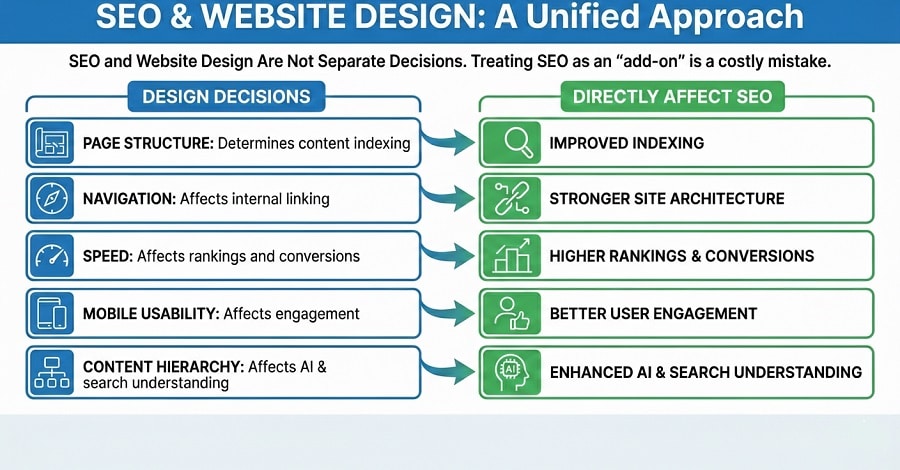
Design decisions directly affect SEO:
- Page structure determines how content is indexed
- Navigation affects internal linking
- Speed affects rankings and conversions
- Mobile usability affects engagement
- Content hierarchy affects AI and search understanding
If a website is designed without SEO awareness, it becomes expensive to fix later.
This is why good designers understand the fundamentals covered in SEO benefits and related guides in the business tips section.
Ask your designer:
- How do you structure pages for search?
- How do you handle internal linking?
- How do you design with mobile SEO in mind?
Vague answers here are a warning sign.
Step 13: Internal Linking and Content Structure Matter Long Term
Internal linking is one of the most overlooked parts of website performance.
Well-structured websites:
- Guide users logically
- Help search engines understand importance
- Support topical authority
- Improve engagement
Designers who think beyond visuals plan for content growth. They leave space for:
- Blog content
- Service expansions
- Location pages
- Educational resources
This approach aligns with long-term growth strategies discussed across the business tips section of Design Hero.
Step 14: Ownership, Access, and Control (A Critical but Ignored Topic)
Before you sign anything, you must understand who owns what.
Ask clearly:
- Who owns the domain?
- Who owns the website files?
- Who controls hosting?
- What happens if we stop working together?
Some designers retain control over sites in ways that make it difficult or expensive to move later.
A professional designer ensures:
- You own your domain
- You have admin access
- You can move hosting if needed
- You are not locked in unfairly
If ownership is unclear, walk away.
Step 15: Hosting, Performance, and Reliability
Hosting affects performance, trust, and SEO.
A good designer should:
- Recommend appropriate hosting
- Design with performance in mind
- Understand how hosting affects speed
- Build sites that can scale
This is especially important for businesses relying on inbound traffic. Hosting problems quietly destroy conversion rates.
The importance of hosting decisions is covered in more depth in hosting for competition and raffle websites, and many of the principles apply equally to service-based businesses.
Step 16: Support, Maintenance, and Life After Launch
A website is not finished at launch.
Ask:
- Who handles updates?
- Are backups included?
- What happens if something breaks?
- Is security monitored?
Designers who disappear after launch leave businesses exposed. Good designers plan for the site’s entire lifecycle.
Step 17: Freelancer vs Agency in Aberdeen
Both freelancers and agencies can be good choices. The key is fit.
Freelancers Often Work Well When:
- The project is simple
- The scope is clear
- You want direct communication
- Ongoing needs are minimal
Agencies Often Work Better When:
- Strategy matters
- SEO is important
- Multiple skills are needed
- The site needs to scale
- Long-term support is required
Neither is inherently better. What matters is capability and approach.
Step 18: Red Flags That Should Make You Walk Away
Some warning signs should stop the conversation immediately:
- No discovery or planning process
- No questions about business goals
- Focus only on visuals
- Weak mobile examples
- No SEO awareness
- Unclear ownership terms
- Unrealistic timelines
- Pricing that sounds too good to be true
Trust your instincts. If it feels rushed or superficial, it usually is.
Step 19: Why So Many Websites Fail After Launch
Most website failures happen quietly.
The site launches. It looks fine. Then:
- Enquiries do not increase
- Search visibility stays flat
- Engagement is low
- Nothing improves over time
This usually happens because the site was built for launch day, not long-term use.
Strong websites are designed to evolve, not just exist.
Step 20: How Design Hero Approaches Website Design
Our approach is simple but disciplined:
- Understand the business first
- Design for clarity and trust
- Build mobile-first
- Structure content for SEO and AI visibility
- Create scalable foundations
We do not design for trends. We design for outcomes.
Final Buyer Checklist (Use This Before You Choose)
Before you commit, make sure you can answer yes to these:
- Does the designer understand my business goals?
- Do they prioritise UX and clarity?
- Do they design mobile-first?
- Do they understand SEO fundamentals?
- Will I own my website?
- Is support available after launch?
- Does the pricing reflect strategy, not just visuals?
If the answer is no to more than one, keep looking.
Conclusion: Choose a Designer Who Thinks Like a Partner
Choosing the best website designer in Aberdeen is not about finding someone who can build a website.
It is about choosing someone who:
- Understands how users think
- Designs for trust and clarity
- Builds with growth in mind
- Treats your website as a business asset
A good website pays for itself many times over. A bad one quietly drains opportunity.
Take your time. Ask better questions. Choose for outcomes, not appearances.
Frequently Asked Questions
How much should a professional website cost in Aberdeen?
Most professional websites fall between £1,500 and £3,000 depending on complexity and strategy.
Is it better to hire a local designer?
Local knowledge helps, but expertise and results matter more than proximity.
How long does a website project usually take?
Most custom websites take four to eight weeks from start to launch.
Should SEO be included in website design?
At minimum, the site should be structured to support SEO from day one.
Looking for a Website Designer in Aberdeen?
If you want a website built for clarity, trust, and real results, not just something that looks good, we can help.
Built with purpose. Designed to perform.