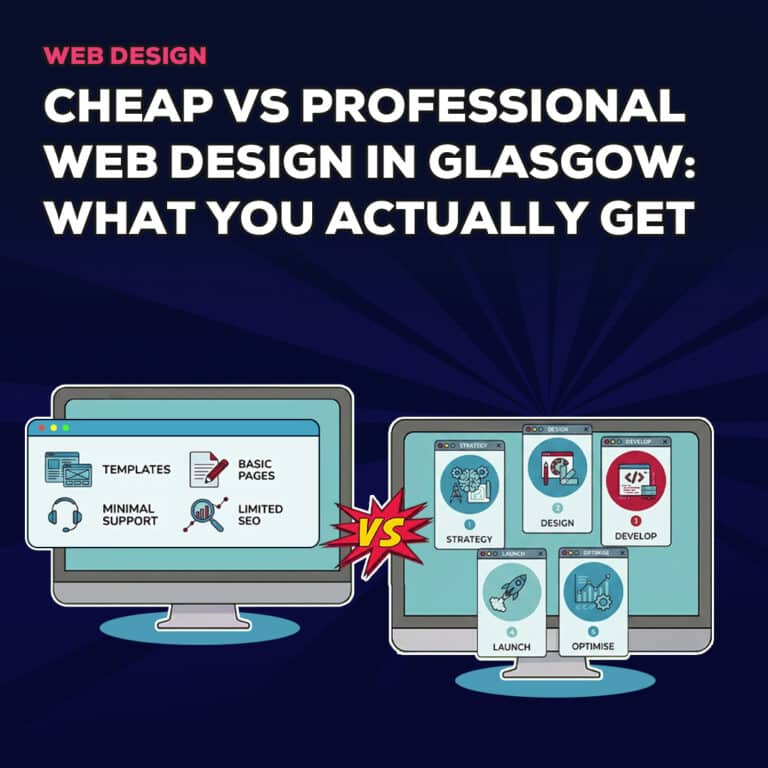


Curious about website design cost in Perth? You’re not alone. The price range might shock you – from £500 for DIY templates all the way up to £100,000 for enterprise-level portals.
Small businesses in Perth can expect to pay between £3,000 and £8,000 for a simple brochure website. More detailed solutions for small-to-medium businesses need an investment of £8,000 to £20,000+. Scottish and UK ecommerce websites starts at £8,500, and this is a big deal as it means that costs can reach £25,000.
The price tag isn’t everything you should think about. DIY platforms seem attractive at £200-£800 per year, but they’ll eat up more than 100 hours of your time. That’s a trade-off you need to weigh carefully.a
This detailed guide breaks down the factors that shape website design costs in Perth (Scotland). You’ll learn about your available options and get practical tips to make the most of your investment.
We’ll show you where your money goes and help you make the right choice for your business, whether you’re building your first website or upgrading an existing one.

Why Getting This Decision Wrong Can Cost More Than the Website
Here’s the part many website pricing guides overlook. The biggest risk is not necessarily paying too much for a website. It can be paying too little and ending up with a site that costs you enquiries every month it remains online.
A website that loads slowly, confuses visitors or fails to explain what your business offers clearly can work against you every time someone visits and leaves without getting in touch. The real question is, how much does website design cost in Perth?
We cover the warning signs in more detail in our guide to signs your business website is costing you leads. The important point is that a website should not be viewed as a simple one-off expense. Its quality can influence how effectively your business turns website visitors into enquiries and customers.
Perth’s website design market covers a wide range of budgets and project types. Understanding what influences the cost makes it easier to compare quotes and decide what your business actually needs.
Average Website Design Prices for Perth Businesses
Website costs vary considerably depending on the size and complexity of the project. Small businesses looking for a professional online presence can expect to pay between £3,000 and £5,000 for a simple 3-5 page website. Professional packages with 5-10 pages and custom design elements range from £5,000 to £8,000.
Websites with more than 10 pages and advanced functionality can cost between £8,000 and £15,000. Businesses that need eCommerce functionality should budget from £8,500 for smaller stores with up to 100 products, while larger catalogues can exceed £25,000.
There are also lower-cost options. A single-page website may cost around £500, while simple 3-page packages can range from £500 to £1,000. The final price depends on what is included, including design, content, functionality and ongoing support.
How Perth Website Prices Compare With Regional Markets
Website pricing can vary between metropolitan and regional markets because of differences in operating costs, demand and the type of agencies and freelancers available.
Based on the pricing figures used in this guide, the indicative ranges are:
- Starter websites (3-5 pages): Perth metro £3,000-£5,000 compared with regional WA at £2,500-£4,000.
- Professional websites (5-10 pages): Perth metro £5,000-£8,000 compared with regional WA at £4,000-£6,500.
- Premium websites (10+ pages): Perth metro £8,000-£15,000 compared with regional WA at £6,500-£12,000.
These figures should be treated as indicative rather than fixed market rates. The scope of the project, experience of the provider and functionality required can all have a significant impact on the final quote.
Real-World Website Pricing Examples
Headline pricing ranges only tell part of the story. Website packages can be structured very differently from one provider to another, so two quotes with similar price tags may include very different levels of design, strategy, development and support.
Across the wider market, professional website projects can range from around $2,500 to $25,000 or more, while small-to-medium business websites can fall anywhere within that range depending on their requirements.
At the lower end, some providers advertise entry-level packages from around $500, while others price a simple one-page website as a standalone service. Freelance and hourly work is also common, with some providers charging around $195 per hour. Starter packages may instead be presented as a fixed price, such as a 3-page website from $3,500 plus GST.
Mid-range custom websites commonly fall somewhere between $3,000 and $10,000+, while more basic brochure websites may start around $2,000-$5,000. Template-based projects can be available from approximately $1,000-$3,000.
The range is broad because the scope of each project can be very different. When comparing quotes, look beyond the headline price and check exactly what design, development, content, SEO, functionality and support are included.
What Affects the Starting Cost of a Website?
Website pricing depends on much more than the number of pages. Design complexity, functionality, content requirements and technical integrations can all increase the amount of time and expertise required.
Developer and project management rates can also vary significantly. The figures provided for this guide include junior developers at £50-£75 per hour, senior developers at £100-£150 per hour and project managers at £90-£120 per hour.
Project timelines vary accordingly. A relatively simple website may take around 4-6 weeks, while an eCommerce project may require 8-12 weeks depending on its complexity and the amount of content and functionality involved.
There can also be additional costs for services such as content creation, SEO, domain registration, hosting and SSL certification. These should be considered when calculating the total cost of a website rather than treated as separate afterthoughts.
Choosing the Right Type of Website for Your Business
Not every business needs the same type of website, and the cost can change significantly depending on what you need the site to achieve.
A startup building its first website may prioritise getting a credible online presence launched quickly, while an established company building a corporate website from scratch may need more complex structures for multiple departments, services and stakeholders. This is reflected in our corporate website design work.
Different industries also have different requirements. A dental practice website, for example, needs to balance patient trust with features such as appointment enquiries, while an enterprise website may need to support larger teams, multiple content owners and more complex technical requirements.
Your choice of CMS can also affect long-term costs. If you’re considering WordPress, our guide to WordPress as a website foundation explains some of the factors worth considering before choosing a platform.
Types of Websites and Their Price Ranges
Website costs can vary from relatively simple DIY builds to highly customised applications. The right option depends on your budget, audience and the functionality your business requires.
1. DIY and Template Websites
Platforms such as Wix and Squarespace can provide an affordable way to establish a basic online presence. The source pricing for this guide puts annual costs at around £200-£800.
The financial cost may be relatively low, but you will need to invest your own time in choosing a template, setting up the website, adding content and configuring the domain and hosting. A DIY approach can work for businesses with straightforward requirements, but it may provide less scope for custom design, strategy and ongoing support.
2. Small Business Brochure Websites
Businesses looking for a more professional online presence can expect to pay around £3,000-£10,000 for a brochure website, depending on the scope.
These websites typically contain around 5-10 pages and may include custom design, professional content, responsive layouts, content management functionality and basic SEO setup.
3. eCommerce Websites
eCommerce websites generally cost more because they require additional functionality for products, payments, customer accounts, orders and stock management.
The source figures put smaller eCommerce websites from around £8,500, with medium-sized stores containing 100-500 products averaging around £20,000. Larger stores with more than 500 products can exceed £35,000.
The platform you choose can also influence the cost. The source material estimates WooCommerce and Shopify projects from around £10,000, while Magento projects begin at approximately £15,000.
4. Custom Web Applications and Portals
Custom web applications and portals sit at the more complex end of the market. Projects can start around £10,000-£50,000 and reach beyond £150,000 for larger enterprise-level systems.
These projects can involve bespoke interfaces, complex integrations, databases, user accounts and functionality designed around specific business processes. The more specialised the requirements, the more development and testing time the project is likely to require.
Key Factors That Influence Website Design Cost
The initial design is only one part of the total cost of running a website. Several factors can influence both the initial build price and your ongoing investment.
Design Complexity and Customisation
A template-based website generally requires less design work than a fully bespoke website. The more custom layouts, visual elements and user experiences you require, the more time the design process is likely to take.
The source figures suggest that custom websites can start around £5,000, with more complex projects reaching £10,000 or more. Costs can increase further when specialist developers, graphic designers or other professionals are required.
Functionality and Integrations
Every additional feature can increase development time and project complexity. Common considerations include:
- Content management system integration
- eCommerce functionality
- Shopping carts and product reviews
- Database implementation
- Interactive multimedia
- Advanced navigation
- Third-party integrations
- API integrations
Complex integrations can involve significant development and ongoing maintenance costs. The price depends heavily on the systems involved, the amount of data being transferred and the level of customisation required.
Content Creation and SEO Setup
Website content is another cost that is easy to overlook when comparing development quotes. Professional copywriting can cost around £50-£150 per page, while larger content creation packages may range from £500 to £5,000 depending on the scope.
SEO can also be included as part of the project or handled separately. Basic SEO setup may include keyword research and on-page optimisation, while ongoing SEO requires a separate investment based on the level of work involved.
Hosting, Domain and Maintenance Fees
A website also has ongoing operating costs after launch. These can include domain registration, hosting, security, updates, backups, technical support and performance monitoring.
The source material estimates Perth hosting packages at around £50-£300 per month depending on traffic and functionality, while a .com.au domain is listed at approximately £50 for two years. Maintenance packages are estimated at around £320 per month.
Actual costs will vary depending on your hosting provider, website size, traffic levels and the level of support required.
Finding the Right Designer or Agency to Work With
Price is only one part of the decision. The person or agency you choose can have a significant influence on the quality of the finished website, so it is worth looking beyond the cheapest quote.
Our guide on how to find a good web designer covers some of the questions worth asking before you commit to a project. Pay particular attention to the proposed scope, ownership of the website, what is included in the price and what happens after launch.
Local knowledge can also be useful when your website needs to target a specific market. A designer who understands your audience can create messaging and user experiences that are more relevant than a generic template.
You can explore the wider range of services provided by Design Hero if you are comparing different approaches to your project.
Choosing the Right Web Design Option for Your Budget
The choice between a freelancer and an agency can affect both your initial budget and how the project is managed. Neither option is automatically right for every business, so the decision should be based on your requirements, timescale and available resources.
Freelancer vs Agency: Pros and Cons
The source figures suggest that freelancers can charge 40-60% less than agencies for comparable work. For example, an agency project costing £15,000 might be quoted at around £6,000-£8,000 by a freelancer, depending on the scope and provider.
Freelancers can also offer direct communication with the person carrying out the work, while agencies may provide access to a wider team covering areas such as design, development, content and SEO.
Ongoing support costs can vary too, with the source material estimating freelancer rates of around £50-£100 per hour and agency rates of approximately £100-£200+ per hour.
Project timelines can also differ:
- Simple 5-7 page website: 4-6 weeks for a freelancer compared with 6-8 weeks for an agency.
- Business website (10-15 pages): 6-8 weeks for a freelancer compared with 8-10 weeks for an agency.
- eCommerce website: 8-12 weeks for a freelancer compared with 10-14 weeks for an agency.
What’s Included in a Professional Website Package?
Professional website packages can include custom design, responsive layouts, content management systems and basic SEO setup. Depending on the provider, additional services may include project management, testing, strategy, content creation and post-launch support.
Before signing a contract, check exactly what is included. Ask whether the quote covers design, development, content, domain registration, hosting, mobile optimisation, SEO, maintenance and future changes.
How to Avoid Hidden Website Costs
Some website estimates focus only on the initial build and leave ongoing costs out of the discussion. These can include domain renewals, hosting, software subscriptions, maintenance, upgrades and additional development work.
Changes outside the agreed scope can also increase the final cost. The clearer your requirements are at the beginning, the easier it is for both sides to understand what the project includes.
Create a project plan covering design, development, content, functionality and marketing. If you know which features and integrations you need before requesting quotes, you can make a much more meaningful comparison between providers.
Tips for Reducing Website Costs Without Cutting Quality
One of the simplest ways to control costs is to have a clear idea of what you want before the project begins. Providing examples of websites, layouts or design styles you like can help reduce unnecessary revisions.
It is also worth prioritising the features your audience actually needs rather than trying to add everything at launch. Focus on your core message, primary conversion goal and the functionality that directly supports your business.
Having one person responsible for final decisions can also help prevent conflicting feedback, duplicated work and unnecessary changes.
What Actually Makes a Website Worth the Money?
A cheap website and an expensive website can look surprisingly similar in a screenshot. The more important question is what happens when a real visitor lands on the site.
Good website design should make it easy for visitors to understand what you offer, establish credibility and take the next step. Our guide to design tactics that make users take action looks at the design, copy and calls to action that can help turn website traffic into enquiries.
This is particularly important in industries where customers are making high-value decisions. In construction, for example, trust needs to be established quickly because potential customers may be considering significant financial commitments. Our guides to designing construction websites that build trust and the best web design practices for construction companies explore these principles in more detail.
Not Sure Whether to Redesign or Start Fresh?
If you already have a website, the question may not be how much a new website costs but whether you actually need to replace the existing one.
A redesign can make sense when the underlying website is still suitable but the visual design, content or user experience needs improvement. A rebuild may be more appropriate when the existing technology or structure is preventing you from achieving what you need.
We’ve covered this decision in more detail in our guide to website redesign or rebuild, including the factors to consider before committing to either option.
Conclusion
Website design costs in Perth can vary significantly depending on the size, complexity and functionality of the project. The figures covered in this guide range from relatively low-cost DIY websites to highly customised enterprise solutions.
For small businesses, the investment can depend heavily on whether you choose a template, freelancer or professional agency, while eCommerce websites and custom applications require a larger budget because of their additional functionality.
When comparing quotes, look beyond the headline figure. Consider what is included in the design and development process, whether content and SEO are covered, what ongoing costs you will face and how much support you will receive after launch.
A detailed specification can also help prevent unexpected costs. Decide which features are essential, establish your primary business goals and make sure each provider is quoting for the same scope.
If you’re looking for professional Perth web design services, the right approach is to start with what your business actually needs rather than choosing a website based purely on the lowest available price.
You can also review published W3Techs data on CMS market share and use Google’s PageSpeed Insights to assess an existing website before deciding whether a redesign or rebuild is necessary.
FAQs
How much should a 20 page website cost?
A 20-page website ranges between £7,000 and £50,000 based on complexity and features. Simple informational sites without complex functionality cost £3,000-£10,000. Websites with e-commerce capabilities, user logins, or interactive elements cost £10,000-£25,000. Custom design work is a big deal as it means that costs rise to £8,000-£30,000 for most 20-page sites.
How much does it cost to pay someone to design your website?
Freelance web designers charge £30-£80 per hour. The industry average sits at £36 per hour. Project costs range from £1,000-£25,000 depending on complexity. Agency rates are 40-60% higher than freelancer rates, with complete projects costing £5,000-£50,000+. A single-page site might cost £500.
How much to charge for a website in Perth, Scotland?
Professional web design services in Perth, Scotland can costs between £5,000-£10,000. Simple websites range from £1,000-£5,000. Small business informational sites can cost £3,000-£6,000. E-commerce websites begin at £10,000.
What is the average price for designing a website?
Website design costs range from £500-£10,000 per project. Simple, brochure-style websites cost several thousand dollars. Detailed corporate websites average £3,000-£5,000. Custom website designs start at £10,000. Small business websites typically cost £3,000-£15,000.
How much should a full website design cost?
There’s no single figure that applies to every business, but as a working guide, a straightforward brochure site for a small business typically lands between £3,000 and £8,000, a more advanced site with custom functionality runs £8,000 to £20,000+, and ecommerce starts from around £8,500 and climbs from there based on catalogue size. The honest answer is that a full website design should cost whatever properly covers your actual scope, design, development, content, and basic SEO, rather than a number chosen in isolation. If a quote seems unusually low against that scope, something is usually missing from it, most often content, SEO, or post-launch support.
Is web design still worth it in 2026?
Yes, if anything more so than a few years ago. As more of your potential customers research businesses online before ever making contact, a weak or outdated website is a more visible liability than it used to be, and a strong one does more of the selling work before a visitor even picks up the phone. What has changed is what “good” looks like: fast loading times, genuine mobile usability, and clear calls to action now matter as much as visual design, which means a website built purely to look nice, without those fundamentals, is worth considerably less than it was a few years ago. Investment in web design remains worthwhile, provided it’s judged by what it actually generates for the business, not just how it looks.
About the author

Nicholas Robb, Founder
The original Design Hero founder, solopreneur and marketing expert; Nick will help you supercharge your business success with a broad skill-set spanning a range of digital marketing fields.
If you want help growing your business...