


What are the 10 Step Build a Raffle Website?
Step 1: Define the Type of Raffle Website You’re Building
Before design or development begins, you must be clear on what kind of raffle website you are creating.
Not all raffle sites operate in the same way, and trying to design for “everything” usually results in confusion and poor conversion rates.
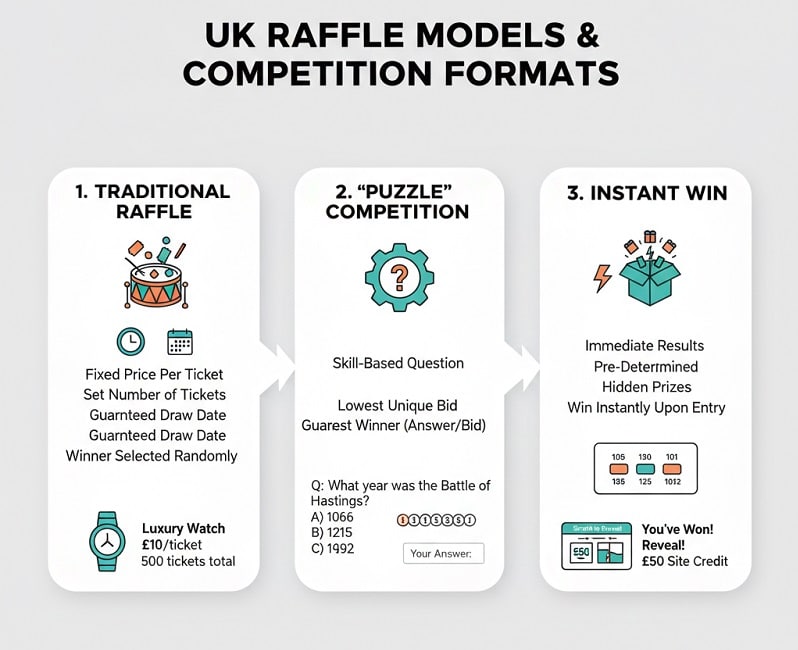
Common UK raffle website models include:
- Single-draw competition sites
- Ongoing raffle platforms with multiple live draws
- Niche-focused raffle sites (cars, tech, experiences, cash prizes)
- Community or cause-led raffles
Each model impacts:
- How competitions are displayed
- How often users return
- How content is structured
- What compliance information is required
Lack of clarity at this stage is one of the most common reasons raffle websites underperform.
We see this repeatedly when reviewing failed or struggling sites, which is why we break it down in 3 reasons raffle sites fail.
A raffle website without a clear model almost always needs rebuilding later.
Step 2: Understand UK Legal and Compliance Requirements Early
In the UK, raffle and competition websites operate within specific legal boundaries.
These rules directly affect how your website must function, what information is shown, and how competitions are explained.
Compliance should never be treated as an afterthought. It shapes:
- Your page layouts
- Your copy tone
- How entry methods are explained
- How winners are selected and displayed
At this stage, you should understand:
- Whether your competition is classed as a raffle, prize competition, or lottery
- Whether a free entry route is required
- How draws will be conducted
- What must be clearly disclosed to users
Trying to “add compliance later” usually leads to awkward design changes or loss of trust. Well-designed raffle websites integrate compliance calmly and visibly.
Step 3: Plan a Clear, Logical Website Structure
Strong raffle websites feel easy to use because the structure makes sense. Users should never feel overwhelmed or unsure where to find key information.
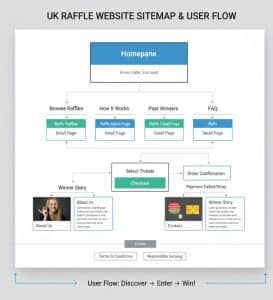
Before design begins, map out a logical sitemap. Most high-performing UK raffle websites include:
- A clear homepage
- Individual competition pages
- A detailed “How it works” page
- Terms and conditions
- FAQs
- About the business
- Previous winners or draw results
- Supporting educational content
This structure:
- Builds trust gradually
- Improves user experience
- Supports SEO and internal linking
It also aligns with long-term growth strategies covered in the competition business guide.
Step 4: Design for Trust Before Visual Style
When it comes to raffle websites, trust always comes before aesthetics.
Design should make users feel:
- Calm
- In control
- Informed
- Confident they are dealing with a legitimate UK business
This comes from:
- Clean layouts
- Clear typography
- Predictable navigation
- Restrained use of animations
- Consistent branding
Overly flashy or experimental designs often raise suspicion rather than excitement. The best raffle websites feel professional and familiar.
If a user has to work to understand your site, conversion drops.
Step 5: Build an Entry Journey That Removes Doubt
The entry journey is where most raffle websites succeed or fail.
A strong entry flow clearly communicates:
- What the user is entering
- How much it costs
- What happens next
- When the draw takes place
For UK audiences, pricing should always be clear and shown in GBP (£).
For example, tickets might be priced at £2, £5, or £10 depending on the prize and odds. Hidden costs or vague pricing erode trust instantly.
Payment is the most sensitive moment in the journey. Even small UX issues here can cause users to abandon.
Choosing the right provider and designing around it is critical, which is why we recommend reviewing how to choose a payment gateway provider for online competition sites.

Step 6: Write Content That Explains, Not Sells
Raffle websites don’t need hype. They need clarity.
UK users are particularly sensitive to exaggerated claims. Content should focus on explaining how the competition works rather than trying to persuade.
High-quality raffle website content:
- Uses plain UK English
- Clearly explains entry mechanics
- Anticipates common concerns
- Avoids unrealistic promises
This applies to:
- Competition descriptions
- FAQs
- Legal pages
- Supporting blog content
Educational content also plays a key role in promotion, which we explore further in how to promote raffle sites.
Step 7: Prove Legitimacy With Real Evidence
Trust grows through evidence, not claims.
As users scroll, your website should reinforce legitimacy with:
- Previous winners (real names, real prizes)
- Draw explanations or recordings
- Clear timelines of past results
- Genuine testimonials
This reduces perceived risk and encourages repeat entries.
Step 8: Optimise for Mobile First
Most UK raffle traffic comes from mobile devices, often via social media or paid ads. If your mobile experience is poor, conversions will suffer regardless of desktop quality.
A mobile-first raffle website:
- Loads quickly on UK mobile networks
- Uses large, tappable buttons
- Avoids dense text blocks
- Keeps CTAs visible
- Makes checkout frictionless
Mobile UX is not optional. It’s where most entries happen.
Step 9: Build for SEO and Sustainable Growth
Raffle websites that rely solely on ads are fragile. SEO provides long-term visibility and reduces acquisition costs over time.
SEO considerations during the build include:
- Clear H1–H3 heading structure
- Internal linking between guides and competition pages
- Optimised images with descriptive filenames and alt text
- Supporting blog content around raffle education and niches
For example, understanding profitable raffle site niches helps shape both content and competition strategy.
Step 10: Optimise Content for AI & LLM Visibility
Modern search is no longer just about blue links. Content must also be clear enough to be understood and summarised by AI systems such as Google AI Overviews, ChatGPT, and Perplexity.
To increase visibility in AI-driven results:
- Use descriptive, question-led headings
- Provide clear explanations early in each section
- Avoid vague or promotional language
- Use consistent terminology across the site
- Write content that makes sense even when quoted out of context
Step 11: Test, Improve, and Refine After Launch
Launching your raffle website is the start, not the end.
After launch, review:
- Entry drop-off points
- Mobile vs desktop behaviour
- Competition performance
- Search queries driving traffic
Successful raffle websites improve continuously rather than remaining static.
Conclusion: Build It Properly or Expect to Rebuild It
Building a raffle website step-by-step is about getting the foundations right.
When UK compliance, structure, design, content, and UX are aligned from the beginning, the result is a website that feels legitimate, converts consistently, and supports long-term growth.
Cut corners early, and you’ll almost always pay for it later in lost trust, poor conversions, or expensive rebuilds.
Need a UK Raffle Website Built to Convert?
At Design Hero, we design UK-focused raffle websites that prioritise trust, compliance, and real-world conversion not generic templates that underperform.
If you’re serious about launching or improving a competition platform, explore our Raffle Website Design service and see how we help raffle brands do things properly from day one.
Simple. Transparent. Built to convert.
Frequently Asked Questions
How long does it take to build a raffle website in the UK?
A properly planned UK raffle website typically takes several weeks from strategy to launch. Rushing the process often leads to compliance or conversion issues.
Do all UK raffle websites need a free entry route?
Not all competitions require one, but many do depending on how they are structured. This should be confirmed before design and content are finalised.
Can I use a template to build a raffle website?
Templates can work for simple projects, but most lack the trust signals, compliance structure, and UX required for serious raffle businesses.
What’s the biggest mistake UK raffle websites make?
Lack of trust. This usually comes from unclear design, weak explanations, hidden compliance information, or a poor mobile experience.