



Which Payment Gateways to Use for Online Competition Sites
If you’re starting an online competition business, you probably know how crucial it is to collect payments securely and reliably. But here’s the reality – most mainstream payment providers won’t support competition sites.
As specialists in launching and scaling competition businesses, we’ve seen countless entrepreneurs get their accounts frozen by platforms like PayPal or Stripe. Why? Because these providers label competition websites as “high-risk.”
In this guide, we’ll break down:
- What a payment gateway does and why it matters?
- Why most competition sites are seen as high-risk
- A vetted list of trusted raffle payment gateway providers
- Must-ask vetting questions to avoid rejection
- Compliance steps required to get approved
- How Design Hero helps make the entire setup stress-free
This advice is based on years of first-hand experience helping entrepreneurs launch successful competition websites that pass compliance and operate without payment disruptions.
What is a payment gateway provider?
A payment gateway lets your website accept card payments, Apple Pay, Google Pay and more. It acts as the bridge between your customer and your bank, processing the payment securely and passing the funds to your business account.
For standard ecommerce sites, Stripe and PayPal are the usual choices. For competition businesses, they are usually not available, especially if you’re just starting out.
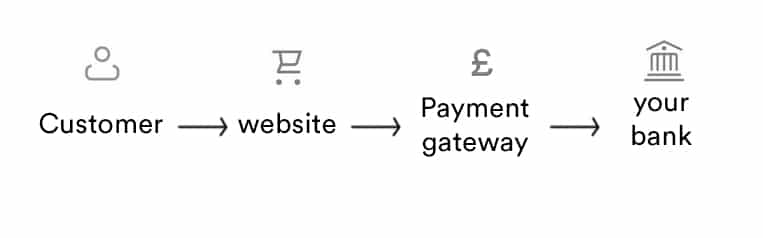
Why competition sites are labelled high risk
Payment processors often group competition sites with gambling and sweepstakes, which triggers stricter underwriting. Regulators and acquiring banks associate these models with higher fraud and chargeback risk.
Even a fully legal, skill-based competition is likely to be flagged. Stripe’s own published list of prohibited businesses, for example, includes games of skill with a monetary or material prize, sweepstakes and contests, and lotteries. Its help pages add that it may be able to support some listed businesses with explicit prior approval, so the practical answer is “not by default, and only with approval”, rather than a flat no. You can read the current wording on Stripe’s prohibited and restricted businesses list, and it’s worth checking PayPal’s current acceptable use policy too, since both change.
In practice, being treated as high risk means:
- Higher setup fees and, often, a rolling reserve
- Applications that are delayed or declined without a clear reason
- More documentation to prove compliance
Understanding this before you approach any provider matters. Applying blindly can waste weeks.
Do you need a Gambling Commission licence?
This is the first doubt most new operators have, and it’s worth answering up front. A genuine prize competition, built around a real skill element or a properly structured free entry route, sits outside the Gambling Act 2005 definition of a lottery, which is why most compliant operators do not hold a Gambling Commission licence. The legal basis is in the Gambling Act 2005, and we cover how this works in practice in our guides on setting up a raffle company in the UK and how to apply for an RMG licence for your raffle website.
Payment providers want evidence of this, not just your word for it. Many will ask for a solicitor’s legal opinion letter confirming your model is lawful. Ask each provider what they require before you apply.
Which payment providers work with competition sites?
These are providers that our clients have used or that we have vetted for competition businesses. They are listed so you can start your research, not as a guarantee of approval.
| Provider | Known for | Worth noting |
|---|---|---|
| Cashflows | Our preferred provider for competition sites | The one we most often recommend to new operators |
| NoChex | UK based, familiar with high risk industries | Regularly supports new competition businesses |
| G2Pay | Flexibility with unusual ecommerce setups and high risk profiles | Worth asking about if your checkout is non-standard |
| DNA Payments | Tailored packages and responsive support teams | Familiar with competition models |
| Acquired | Merchant compliance focus | Works closely with high risk clients on long term setups |
| Axcess | Integrates well with WordPress and WooCommerce | Frequently chosen for ease of integration and setup support |
This list reflects our own client experience and is not exhaustive. Always confirm whether a provider is the end acquirer or a broker, and check current terms with them directly.
At Design Hero, we have working relationships with these providers and can refer you to the right one for your platform, audience and revenue model. I’ll need a short chat first to make sure you’re a good fit. You can book a call with me and I’ll also give you guidance on starting a competition business.
What payment gateway fees look like for competition businesses
Fees vary between providers and between applicants. These are typical ranges quoted to competition businesses, which you should confirm against each provider’s own current quote:
- Transaction fees: commonly 1.5% to 3.5%
- Setup fees: a one-off onboarding fee, often £100 to £500 or more
- Rolling reserves: a percentage of revenue, often 5% to 10%, held temporarily and released on a schedule
- Monthly fees: these may apply depending on volume and risk profile
If you have a strong launch plan and a credible turnover forecast, you may be able to negotiate better terms.
The fixed fee matters more than the percentage on low ticket prices
Many competition sites sell low-priced tickets, and this is where a headline percentage misleads. Many processors add a fixed fee per transaction on top of the percentage.
Here is an illustrative example. These are made-up numbers to show the arithmetic, not any provider’s actual fees. Suppose a provider charges 20p plus 2.5% per transaction:
| Basket | Fees | Fee as a share of the sale |
|---|---|---|
| One £1 ticket | 20p + 2.5p = 22.5p | 22.5% |
| A £10 bundle | 20p + 25p = 45p | 4.5% |
That is why many operators encourage bundles or credit packs, so one payment covers many entries. Our guide on how to price raffle tickets covers bundle pricing in more detail. When you get a quote, ask for the fixed per-transaction fee, not just the percentage, and work out the cost on your own average basket.
Key questions to ask a payment gateway provider
Not all providers are transparent about supporting competition sites. This is the vetting checklist we recommend to every client:
- Do you support startup competition businesses with no previous turnover?
- Are you the end provider, or a broker or agent?
- What are the transaction fees, fixed per-transaction fees and setup costs?
- Which payment methods do you support, including Visa, Mastercard, Apple Pay and Google Pay?
- Do you offer a plugin for WooCommerce or WordPress?
- Is the checkout embedded, or does it redirect to another site?
- Can you show screenshots or a demo of the checkout?
- Do you support onsite credits or reward systems?
- Will you provide developer documentation and integration support?
- How often do you settle funds, and how long is any rolling reserve held before release?
- What chargeback ratio triggers a review, and what happens if I exceed it?
- What are the termination terms, and what notice will you give before closing an account?
- Do you require a legal opinion letter, and what must it cover?
Asking these upfront avoids delays and unpleasant surprises later.
Chargebacks and refunds
Chargebacks are a central concern for any provider supporting competition sites, so how you handle them affects both approval and long term stability.
- Be clear at checkout. State what the customer is buying, how entries work, the draw date and your refund policy before they pay.
- Make your payment descriptor recognisable. Customers who don’t recognise a charge on their statement are more likely to dispute it.
- Confirm every entry immediately. Send an email with entry details and ticket numbers straight after purchase.
- Make support easy to reach. A visible phone number and email reduce disputes, because an unhappy customer who can reach you rarely goes to their bank.
- Know your thresholds. Card schemes monitor dispute levels, and your provider will have limits. Ask for them in writing.
Treat the gateway as a pipe for your takings, not a bank. Ask about settlement frequency and reserve release terms, and plan your cash flow around what actually reaches your account.
Compliance documents you’ll need
Each provider asks for slightly different things. In most cases you’ll need:
- Government-issued photo ID
- Registered company details (Companies House registration if UK based)
- A registered business address
- Proof of bank account ownership
- Evidence of ownership or purchase of the first prize
- Clear Terms and Conditions and a Privacy Policy
- Website contact information (phone number and email)
- A solicitor’s legal opinion letter, if the provider requires one
Website compliance checklist for payment approval
Providers inspect your website for trust and legality before approving you. This is the checklist we follow on every competition site we build:
- A free entry route, where your model relies on one
- Clearly visible Terms, Privacy and Cookie policies
- A physical company address and contact details in the footer
- No placeholder text and no fake testimonials
- Verified prize evidence (for vehicles, the V5C and MOT)
- Accurate statistics, and no fact boxes you can’t support
- No implied charity involvement unless it has been verified
- A description of your business that is accurate and matches your application
That last point deserves explanation. In UK law, a raffle is a form of lottery, while a prize competition built on skill or a free entry route is a different legal category. If your business is a prize competition, using accurate terminology on your site matters. What you must never do is describe your business differently on your website than you did on your application. A mismatch can lead to account termination and a record on the card schemes’ terminated merchant list, which makes getting a new account far harder.
Getting compliance wrong can get your site blacklisted by providers, and the same preparation helps with advertising approval too, covered in our guides on RMG approval for raffle sites and why raffle sites fail.
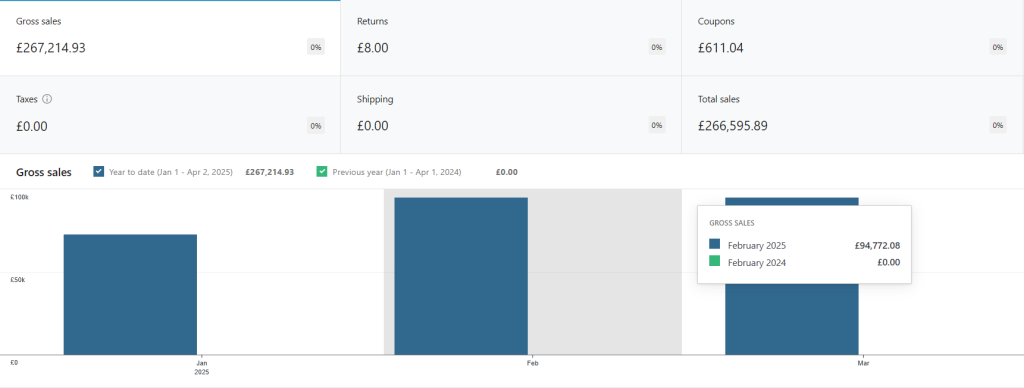
You can see the kind of competition site this payment setup supports in our Power Competitions success story.
Why work with Design Hero
We’ve helped entrepreneurs launch competition websites with compliant designs and workable payment setups. When you work with us, you get:
- Introductions to payment providers that suit your platform and model
- A website built to the compliance checklist above, which helps applications move faster
- Ready-made terms and privacy policy templates for your solicitor to review
- Developer support for WooCommerce and Apple Pay integration
- Guidance on avoiding the red flags that slow approvals
You focus on growing your competition business and we handle the technical build and compliance preparation. Explore our competition website design service, or read how a payment decision fits into choosing the best platform for a raffle website and hosting for competition sites. For the wider picture, our competition guide and raffle site FAQs for UK operators cover the rest of the launch process.