

Why Upselling Matters for Competition Websites?
Competition websites operate on thin margins. Entry prices are often deliberately kept low typically £2 to £10 per ticket to reduce friction and encourage participation.
That makes upselling strategically important.
Instead of relying solely on:
- Higher ticket prices
- More aggressive advertising
- Constant new competitions
Well-run platforms focus on:
- Increasing average basket value
- Improving lifetime value per entrant
- Encouraging repeat participation
However, upselling only works if users already trust the website. If trust is weak, any upsell feels manipulative. This is why many competition sites fail to monetise properly a problem closely linked to broader issues outlined in reasons raffle sites fail.
1. Upselling Starts With Trust, Not Tactics
Before adding upsells, your website must already do the basics well.
That means:
- Clear competition rules
- Transparent pricing
- Obvious entry confirmation
- Visible compliance information
- Professional design and UX
Upselling should never compensate for poor foundations. If users already feel unsure, adding extra offers simply increases abandonment.
The rule is simple: if your site doesn’t feel legitimate, upselling will make it feel worse.
If you’re unsure whether your platform is structurally ready, review your setup against raffle, competition and lottery site guidance and the code of good conduct for raffle sites before moving forward.
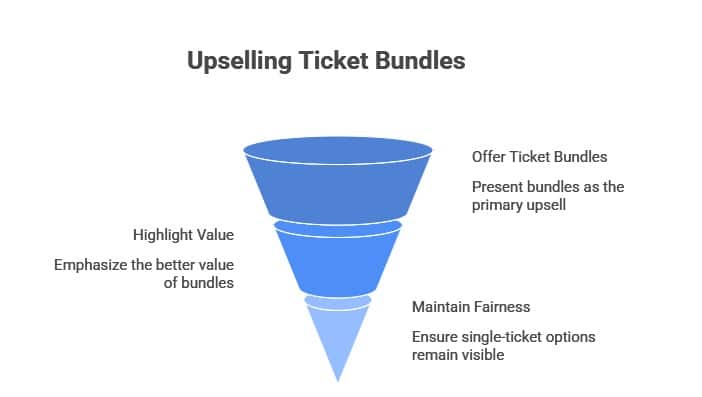
2. Offer Multi-Ticket Bundles as the Primary Upsell
The most effective upsell for UK competition websites is also the simplest: ticket bundles.
Rather than pushing unrelated add-ons, you offer better value on the core product the user already wants entries.
Common examples include:
- 1 ticket for £3
- 5 tickets for £12
- 10 tickets for £20
This approach works because:
- It improves perceived value
- It doesn’t change the competition mechanics
- It feels fair and transparent
- It aligns naturally with user intent
Bundles should be presented clearly and early, without hiding single-ticket options.
3. Use Checkout-Stage Upsells Carefully
The checkout is where intent is highest and where mistakes are most costly.
Well-designed competition websites use light-touch checkout upsells, such as:
- Add 3 extra entries for £5
- Upgrade to 10 tickets for better odds
Poorly designed sites:
- Add multiple pop-ups
- Hide the close button
- Introduce last-second surprises
In the UK, transparency is critical. Users must always understand:
- What they’re paying
- Why it costs more
- That the upsell is optional
Checkout upsells should never interfere with payment clarity, which is why payment UX and provider choice matter. If you’re unsure, review how to choose a payment gateway provider for online competition sites.
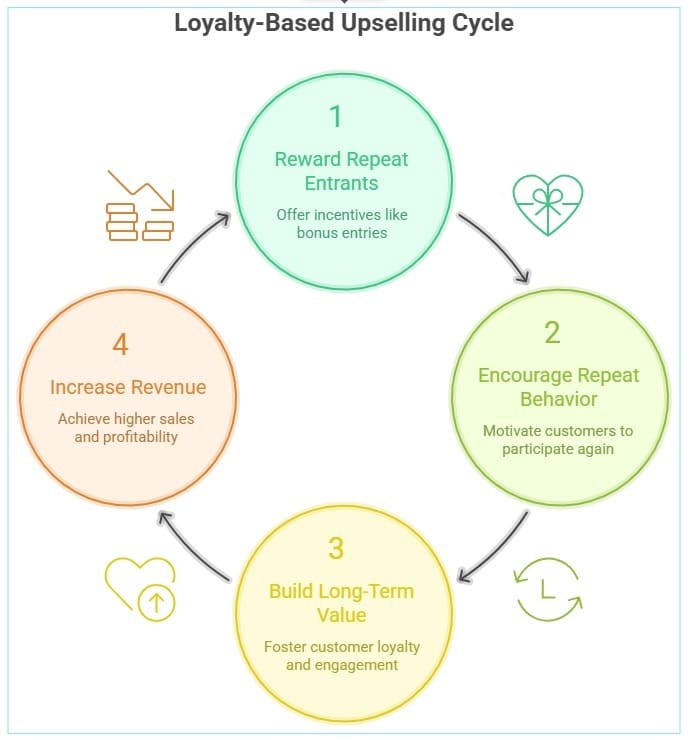
4. Reward Repeat Entrants With Loyalty-Based Upsells
Not all upselling needs to happen during a single transaction.
Some of the highest-performing competition websites increase revenue by rewarding repeat entrants with:
- Bonus entries on future competitions
- Exclusive bundle pricing
- Early access to upcoming draws
This approach:
- Encourages repeat behavior
- Feels fair rather than pushy
- Builds long-term customer value
It also aligns well with promotion strategies discussed in how to promote raffle websites, particularly email and community-based marketing.
5. Use Scarcity Carefully (And Honestly)?
Scarcity can increase conversions, but only when it’s genuine.
Ethical scarcity signals include:
- Limited ticket caps clearly displayed
- Countdown timers tied to real draw dates
- Only X tickets remaining messaging based on actual availability
False scarcity damages trust quickly especially in the UK, where users are sensitive to misleading tactics.
If scarcity messaging feels artificial, it will:
- Increase bounce rates
- Reduce repeat entries
- Harm brand reputation
Upselling works best when it feels like an opportunity, not pressure.
6. Upsell Through Education, Not Pressure
One of the most overlooked upselling strategies is education-led upselling.
Instead of pushing offers, explain:
- How odds improve with more entries
- Why certain bundles exist
- What past winners typically entered with
This approach is subtle but effective, especially when combined with supporting content from your blog and guides.
Educational content also strengthens your site’s authority and SEO, which is a key part of long-term growth outlined in the competition business guide.
7. Segment Upsells by Competition Type
Not all competitions upsell the same way.
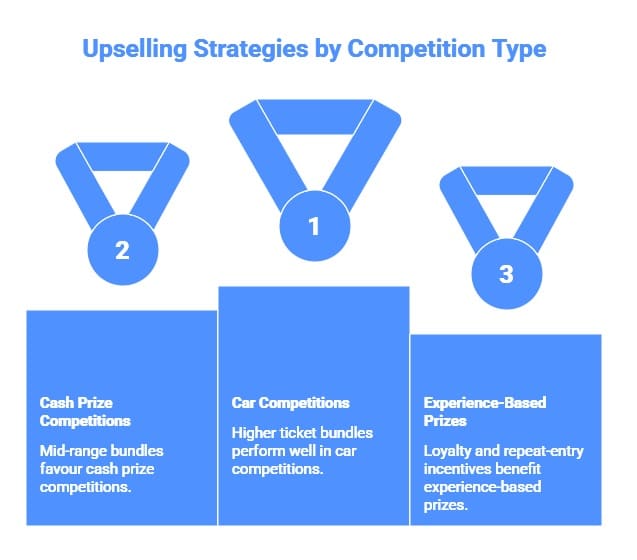
For example:
- Car competitions often perform well with higher ticket bundles
- Cash prize competitions favour mid-range bundles
- Experience-based prizes may benefit from loyalty or repeat-entry incentives
Understanding this nuance is critical, which is why niche-specific thinking matters. If you haven’t already, review profitable raffle site niches to align upselling strategies with competition type.
How to Avoid Upselling That Creates Compliance Risk?
Some upselling ideas are tempting but risky.
Avoid:
- Bundles that obscure ticket pricing
- Upsells that change entry mechanics without explanation
- Add-ons that feel like gambling multipliers
All upsells must:
- Be optional
- Be clearly priced in GBP (£)
- Be explained in plain UK English
- Align with your published terms
If an upsell requires complex explanation, it’s usually not worth the risk.
How to Optimising Upsells for SEO & AI Visibility?
Upselling content shouldn’t live only in the interface. It should also be explained clearly in your supporting content.
This helps:
- Users understand your pricing structure
- Google and AI systems correctly interpret your business model
- Reduce misclassification as a “gambling” site
To improve AI and LLM visibility:
- Use clear headings explaining pricing and bundles
- Avoid vague marketing language
- Define how entries, bundles, and bonuses work
- Keep terminology consistent site-wide
Clear explanations make your upselling strategy easier for AI systems to summarise accurately in AI Overviews and conversational search results.
Conclusion: Upselling Works When It Feels Fair
Upselling on competition websites is not about squeezing more money out of each entrant.
In the UK market especially, it’s about earning the right to increase value per user through clarity, fairness, and good experience design.
The competition websites that grow consistently are not the ones with the most aggressive tactics.
They’re the ones that understand how users think. People entering raffles already accept a level of risk what they don’t accept is confusion, pressure, or anything that feels misleading.
When upsells respect that mindset, they stop feeling like sales tactics and start feeling like sensible options.
The strongest upselling strategies are built on three foundations:
- Trust – Clear rules, transparent pricing in GBP (£), visible compliance, and proof that real people win.
- Relevance – Upsells that enhance the core action (entering a competition), not distract from it.
- Restraint – Offering better value without overwhelming users or introducing unnecessary friction.
When these foundations are in place, upselling becomes a natural extension of the user journey.
Multi-ticket bundles feel logical. Checkout upgrades feel optional rather than forced. Loyalty incentives feel like a reward, not a hook.
Just as importantly, ethical upselling protects your long-term brand. Competition websites live or die on reputation.
A short-term revenue lift achieved through pushy tactics is rarely worth the damage it causes to trust, repeat entries, and word-of-mouth.
If you approach upselling as part of a trust-led business model, rather than a quick optimisation trick.
It becomes one of the most powerful levers you have for sustainable growth increasing average order value, improving customer lifetime value, and supporting your marketing spend without compromising credibility.
In short, upselling works best when users don’t feel sold to they feel looked after.
Want a Competition Website Built to Convert (Without the Sleaze)?
At Design Hero, we design UK competition and raffle websites that increase revenue ethically through trust-led UX, clear pricing, and smart upselling built into the experience.
If you want a platform that converts better without damaging credibility, explore our Raffle Website Design service and see how we help competition brands grow properly.
Built for trust. Designed to scale. Optimised to convert.
Frequently Asked Questions
Are upsells allowed on UK competition websites?
Yes, provided they are transparent, optional, and clearly priced. Upsells must not mislead users or alter competition mechanics without explanation.
What’s the safest upsell for raffle websites?
Multi-ticket bundles are the safest and most effective upsell, as they enhance value without changing how the competition works.
Can upselling reduce trust if done badly?
Absolutely. Hidden costs, aggressive pop-ups, or misleading scarcity quickly damage trust and reduce repeat entries.
Should upsells appear before or after entry?
Most platforms perform best when bundles are shown before selection and light upsells appear during checkout never after payment.