


Understanding the Prize Competition Business Model
Before discussing scaling strategies, it is important to understand how the prize competition business model works in the UK.
Most competition websites operate on an entry based system. Participants purchase tickets for a chance to win a specific prize. These prizes can range from luxury items such as cars or watches to smaller electronics or cash rewards.
To comply with UK regulations, competitions usually include a skill based question. Participants must answer the question correctly before their entry is accepted.
This element distinguishes prize competitions from lotteries and allows businesses to operate legally without a gambling licence.
Revenue is generated through ticket sales. Each ticket represents an entry into the draw. When ticket sales exceed the cost of the prize and operational expenses, the competition generates profit.
The key to scaling lies in repeat participation. Successful platforms build communities of participants who return for future competitions. Instead of relying solely on one large competition, they run multiple competitions regularly and maintain engagement with their audience.
Consistency and trust therefore become critical components of the business model.
Foundations of a Scalable Competition Website
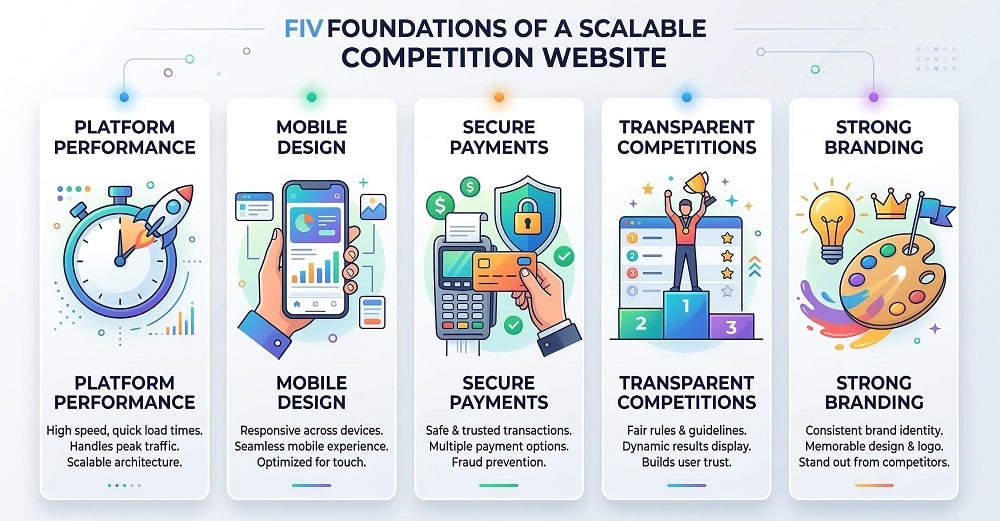
A competition website designed for growth must be built on strong technical and strategic foundations. Without these fundamentals, marketing efforts become less effective and user trust can decline.
1. Reliable Platform Infrastructure
Competition websites often experience spikes in traffic when new prizes are announced or when marketing campaigns gain momentum. The website infrastructure must handle these traffic surges without slowing down or crashing.
Reliable hosting, efficient coding and scalable architecture ensure the platform remains stable even during high demand periods.
2. Mobile First Design
Many competition entries happen on mobile devices. Users scrolling through social media may click on an advertisement and enter a competition directly from their phone.
If the website is difficult to navigate or the checkout process is complicated on mobile, potential participants will abandon the process quickly.
Mobile first design ensures that the entire journey, from viewing the prize to purchasing tickets, works seamlessly on small screens.
3. Secure Payment Processing
Participants must feel confident when entering payment details. Secure payment gateways, encrypted transactions and clear payment confirmations are essential.
Security indicators and recognised payment providers increase trust and reduce hesitation during checkout.
4. Clear Competition Structure
Every competition page should explain the rules clearly. Participants need to understand the prize, ticket price, number of available entries and closing date.
Transparency reduces confusion and encourages more users to participate.
5. Strong Brand Identity
Prize competition websites often compete for attention on social media. A clear brand identity helps a platform stand out in a crowded market.
Consistent colours, messaging and visual style make the website more memorable and trustworthy.
Trust Signals That Drive Ticket Sales
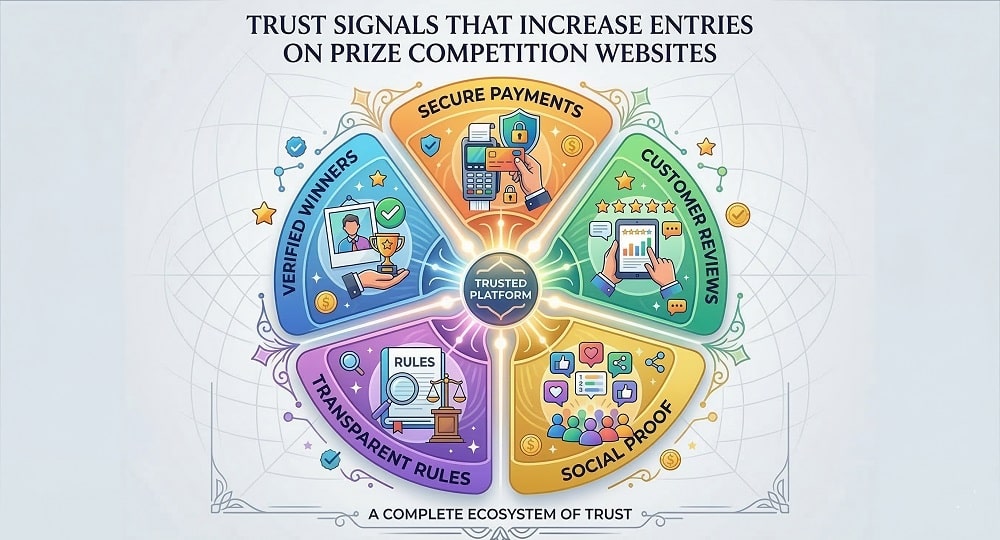
Trust plays a critical role in the success of prize competition websites. Participants must believe that the competitions are genuine and that winners are selected fairly.
Without visible proof, potential customers may hesitate to purchase tickets.
Transparent competition rules are the first trust signal. Each competition page should clearly explain how the winner will be chosen and when the draw will occur.
Winner announcements are equally important. Publishing the names or testimonials of past winners demonstrates that the platform delivers real results. Video announcements or social media posts can strengthen credibility further.
Customer testimonials and reviews also contribute to trust. When previous participants share positive experiences, new visitors feel more confident entering competitions.
Social proof extends beyond testimonials. Visible follower counts, active social media communities and engagement from real users reinforce legitimacy.
Secure payment indicators provide another layer of reassurance. Recognisable payment logos and SSL security certificates signal that transactions are protected.
For competition websites, trust signals directly influence ticket sales. The more confident participants feel, the more likely they are to enter.
Marketing Channels That Scale Competition Websites
Even the most attractive prize will not generate ticket sales without effective marketing. Competition platforms that scale successfully rely on multiple marketing channels working together.
1. Social Media Marketing
Social media plays a central role in the competition business model. Platforms such as Facebook, Instagram and TikTok allow competition websites to showcase prizes visually and reach large audiences quickly.
Regular posting, engaging content and community interaction help build an audience that returns for future competitions.
2. Paid Advertising
Paid advertising accelerates growth by driving targeted traffic to competition pages. Meta and Google advertising platforms allow businesses to reach specific demographics interested in similar products or competitions.
Successful campaigns often highlight the prize value, ticket price and closing date clearly.
3. Email Marketing
Email remains one of the most effective marketing channels for competition websites. Once users enter a competition, they can be invited to join an email list.
Email reminders about upcoming competitions, last chance entries and winner announcements keep participants engaged.
4. Influencer Collaborations
Partnering with influencers can expand reach significantly. Influencers introduce competitions to new audiences and provide social proof through trusted recommendations.
5. Referral Programmes
Referral programmes encourage existing participants to invite friends. When users receive additional entries or rewards for referrals, the platform benefits from organic growth.
Combining these channels creates a marketing system that supports consistent competition launches.
Website Design Elements That Increase Entries
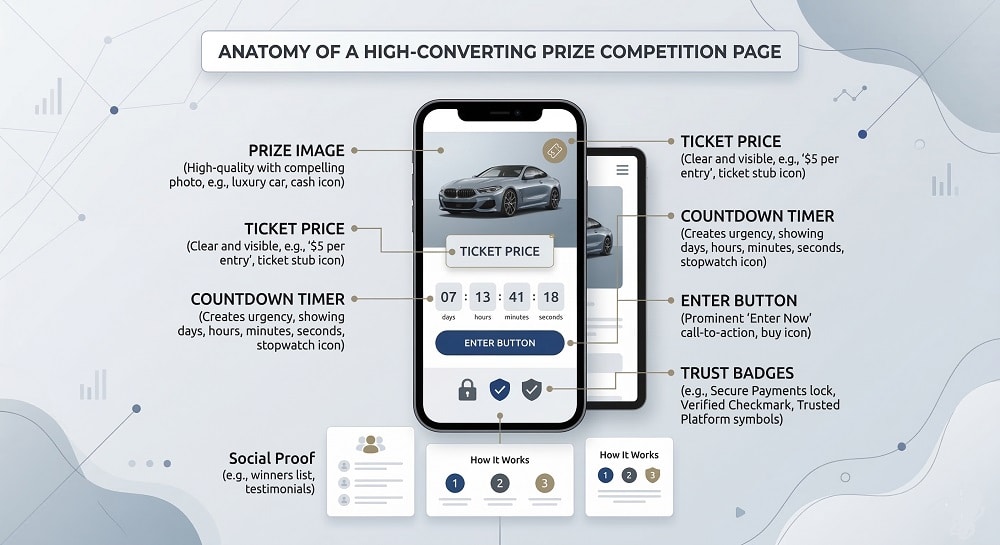
Marketing may bring visitors to a competition website, but design determines whether those visitors actually purchase entries. Even small usability improvements can significantly increase ticket sales.
Clear Competition Pages
Every competition page should present the most important information immediately. Visitors should see the prize, ticket price and closing date without scrolling.
Images of the prize should be high quality and visually engaging. If the prize is a physical item such as a car or gadget, multiple images help build excitement and trust.
The description should explain what the winner receives and highlight the value of the prize. Clear presentation reduces hesitation.
Strong Calls to Action
Competition websites rely heavily on clear calls to action. Buttons such as “Enter Now” or “Get Your Tickets” should be highly visible and placed strategically throughout the page.
These calls to action should appear above the fold, near the prize description and again after additional details. Repetition ensures users can enter the competition at the moment they decide to participate.
Countdown Timers
Urgency increases participation. Countdown timers showing the time remaining until the competition closes encourage users to act quickly.
Seeing that a competition ends soon often prompts visitors to purchase entries immediately rather than delaying their decision.
Simple Checkout Process
The checkout process must remain straightforward. Users should be able to select ticket quantities, answer the skill based question and complete payment without unnecessary steps.
Reducing friction at checkout is essential. The fewer obstacles participants encounter, the higher the conversion rate.
Mobile Friendly Purchase Flow
Since many users discover competitions through social media, the purchase journey must work smoothly on mobile devices.
Large buttons, simple navigation and quick loading pages make it easier for users to complete entries on their phones.
When the mobile experience feels effortless, more visitors become participants.
Data and Optimisation
Scaling a competition website to six figures requires more than launching competitions and running advertisements. Continuous optimisation based on data is essential.
1. Conversion Tracking
Conversion tracking reveals how many visitors purchase tickets and where they drop off during the process. Tools such as Google Analytics and advertising platform dashboards provide valuable insights into user behaviour.
Understanding which pages generate entries allows businesses to focus on improving the areas with the greatest impact.
2. A/B Testing
Testing different variations of pages can reveal which elements improve performance. For example, changing the headline, adjusting the placement of the entry button or experimenting with different prize images may increase ticket sales.
A/B testing allows businesses to make informed decisions rather than relying on assumptions.
3. User Behaviour Insights
Heatmaps and session recordings provide deeper insight into how visitors interact with the website. These tools show where users click, how far they scroll and where they abandon the page.
This information highlights usability issues that might otherwise go unnoticed.
4. Marketing Performance Analysis
Successful competition websites analyse marketing performance regularly. Advertising campaigns, email newsletters and social media promotions should all be measured carefully.
Tracking which channels produce the most entries helps allocate marketing budgets more effectively.
When data guides decision making, growth becomes more predictable.
Common Reasons Competition Websites Fail to Scale
Many competition platforms launch successfully but struggle to maintain growth. Understanding the common causes of stagnation can help founders avoid these pitfalls.
Weak branding is one of the most common issues. When a competition website looks generic or unprofessional, potential participants may question its legitimacy.
Poor trust signals also create problems. Without visible proof of winners, transparent rules and secure payments, users may hesitate to enter.
Complicated checkout processes can reduce ticket sales significantly. Every unnecessary step in the purchase journey increases abandonment rates.
Inconsistent marketing efforts represent another challenge. Competition websites rely on continuous promotion. When marketing activity becomes irregular, audience engagement drops quickly.
Finally, poor mobile experiences often limit growth. If users struggle to enter competitions from their phones, marketing campaigns lose effectiveness.
Addressing these issues early allows competition platforms to maintain momentum.
How Design Hero Helps Competition Websites Scale
Scaling a prize competition website requires a combination of strong design, reliable infrastructure and marketing ready functionality. At Design Hero, competition platforms are built with growth in mind from the start.
The process begins with strategy. Understanding the target audience, prize structure and marketing channels allows the platform to be designed around user behaviour.
Competition pages are structured to maximise conversions. Clear prize presentation, strong calls to action and simplified checkout flows make it easy for visitors to purchase entries.
Technical performance is also prioritised. Fast loading pages and scalable infrastructure ensure the website remains reliable even during traffic spikes.
Brand identity plays a critical role as well. Competition websites must build trust quickly. Consistent branding and professional design help reinforce credibility.
Clients work with one point of contact throughout the process, ensuring communication remains clear and decisions align with the overall growth strategy.
For UK entrepreneurs looking to build or expand a prize competition platform, this integrated approach provides the foundation needed for sustainable growth.
Want to Scale your competition website? Design Hero can help, contact for free consultation
Six Figure Competition Website Growth Checklist
Entrepreneurs looking to scale their prize competition platform can use the following checklist as a practical reference.
- Clear brand identity: The platform should feel trustworthy and visually distinctive.
- High converting competition pages: Prize information, ticket price and calls to action must be clear.
- Strong trust signals: Transparent rules, winner announcements and secure payments build credibility.
- Scalable marketing strategy: Social media, advertising and email campaigns should work together.
- Mobile first user experience: The entire entry process must work smoothly on mobile devices.
- Data driven optimisation: Analytics and testing should guide improvements over time.
When these elements work together, competition platforms are far more likely to reach six figure revenue levels.
Final Thoughts
Prize competition websites can grow quickly when the right foundations are in place. The business model allows entrepreneurs to generate revenue through engaging competitions, but success depends on more than attractive prizes.
Trust, marketing and platform performance must work together. Visitors need to feel confident that competitions are genuine, easy to enter and fairly managed.
Websites designed for conversion make this process simple. Clear competition pages, strong calls to action and smooth checkout journeys increase participation.
For entrepreneurs across the UK building competition platforms, focusing on these fundamentals creates the conditions for consistent growth.
Scaling to six figures is not just about running bigger competitions. It is about building a system that attracts participants, earns their trust and encourages them to return for the next draw.