

What Gamification Actually Means for Websites
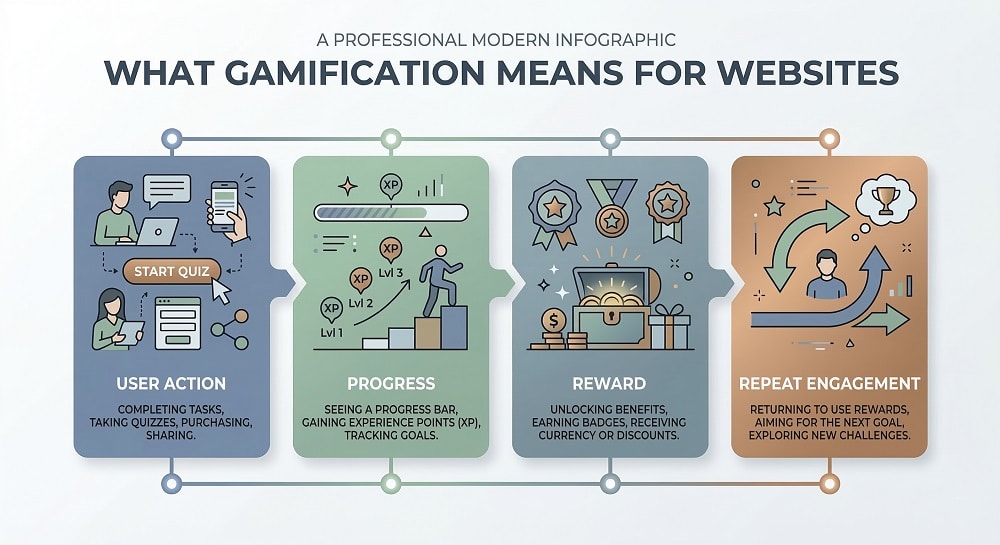
Gamification is often misunderstood. It does not mean turning your website into a game. It means applying simple interactive elements that encourage users to take action.
At its core, gamification is about behaviour.
It creates a sense of progress, reward and urgency. It gives users feedback when they act. It makes the experience feel dynamic rather than static.
For competition websites, this aligns naturally with how users already behave. Entering a competition involves anticipation, decision making and reward.
Gamification enhances these moments rather than replacing them.
In practical terms, gamification includes:
- Visual cues that show progress
- Time based urgency elements
- Rewards for participation
- Feedback when actions are completed
When implemented correctly, these elements guide users smoothly through the journey and increase engagement at every step.
Why Gamification Works for Competition Websites
Competition websites are already built around motivation and reward. Gamification strengthens these drivers.
Users enjoy participation. Entering a competition is not just a purchase. It feels like an opportunity. This emotional layer makes users more receptive to interactive elements.
Rewards drive action. Even small incentives such as bonus entries or limited time offers can encourage users to complete a purchase.
Progress creates motivation. When users can see how close a competition is to selling out or how many entries they have secured, they feel more involved.
Urgency increases conversions. Time limits and scarcity push users to act quickly instead of delaying decisions.
These behavioural triggers are powerful because they reduce hesitation. Instead of overthinking the decision, users are guided toward action.
For competition websites, this directly translates into higher ticket sales and stronger repeat engagement.
Gamification Techniques That Increase Engagement and Sales
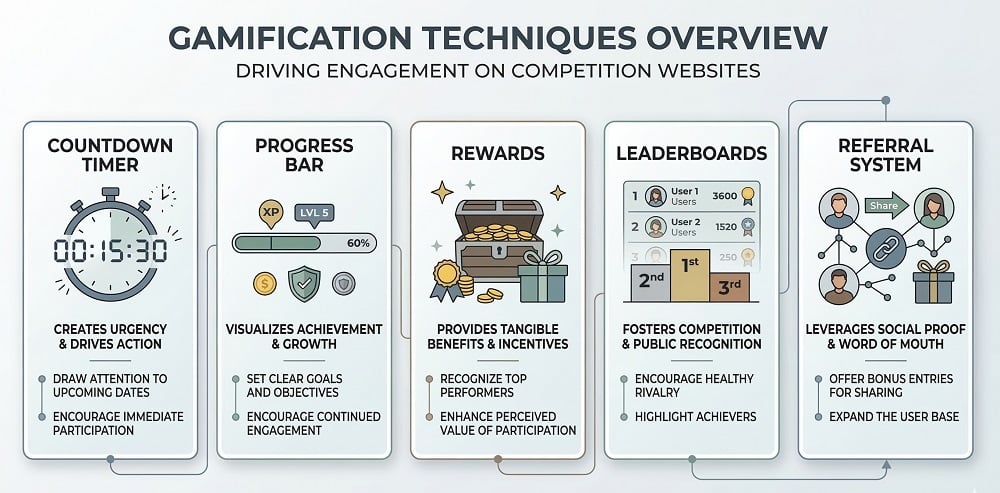
The most effective gamification techniques are simple, visible and aligned with the user journey. Below are the key tactics competition websites can implement.
1. Countdown Timers
Countdown timers show how much time is left before a competition ends. They create urgency and push users to act quickly.
When users see a timer ticking down, they are less likely to postpone their decision. The fear of missing out becomes a strong motivator.
Timers should be placed prominently on competition pages and near calls to action.
2. Progress Bars
Progress bars show how many tickets have been sold or how close a competition is to completion.
This creates momentum. Users feel they are part of something that is already progressing. It also introduces scarcity, as fewer tickets remain available.
A simple visual bar can significantly increase perceived demand.
3. Instant Win Elements
Instant win features provide small rewards alongside the main competition. For example, users might receive a bonus entry or a small prize immediately after participating.
These elements add excitement and reduce the feeling of waiting for a single outcome.
They also encourage users to enter multiple times.
4. Loyalty Rewards
Loyalty systems reward repeat participation. Users who enter multiple competitions can receive discounts, bonus entries or exclusive access to future competitions.
This builds long term engagement rather than one time participation.
For growing platforms, loyalty systems can create a core audience of regular participants.
5. Leaderboards or Recent Winners
Displaying recent winners or top participants builds excitement and trust. Users can see that real people are winning, which reinforces credibility.
Leaderboards also introduce a competitive element. Users may feel motivated to participate more frequently.
6. Limited Time Bonuses
Limited time bonuses offer additional entries or discounts for a short period.
These incentives encourage immediate action and can be used during marketing campaigns to boost ticket sales quickly.
7. Interactive Entry Process
The entry process itself can feel more engaging. Instead of a static form, subtle animations or step by step interactions can make the process feel dynamic.
For example, confirming an answer to the skill based question can trigger a visual response, reinforcing the action.
8. Referral Rewards
Referral systems encourage users to invite others. When participants receive extra entries for referrals, the platform benefits from organic growth.
This technique combines gamification with marketing, making it highly effective.
9. Streaks or Repeat Participation Incentives
Rewarding users for consistent participation encourages habit formation. For example, users who enter competitions regularly could receive increasing rewards.
This keeps users returning to the platform.
10. Visual Feedback on Actions
Every action should feel acknowledged. When users purchase tickets or complete an entry, visual feedback such as animations or confirmation messages reinforces the experience.
This makes the process feel satisfying and complete.
Where Gamification Can Go Wrong
Gamification can improve engagement, but it must be applied carefully. Poor implementation can have the opposite effect.
Overcomplicating the experience is one of the most common mistakes. If users feel overwhelmed by too many elements, they may abandon the process entirely.
Slowing down the checkout process is another issue. Gamification should never introduce friction. The purchase journey must remain quick and simple.
Distraction is also a risk. Elements that do not support the main goal can reduce conversions.
Mobile performance is critical. Gamification features must work smoothly on mobile devices. Poor implementation can lead to frustration and drop offs.
The key is balance. Gamification should enhance the experience, not dominate it.
Balancing UX and Gamification
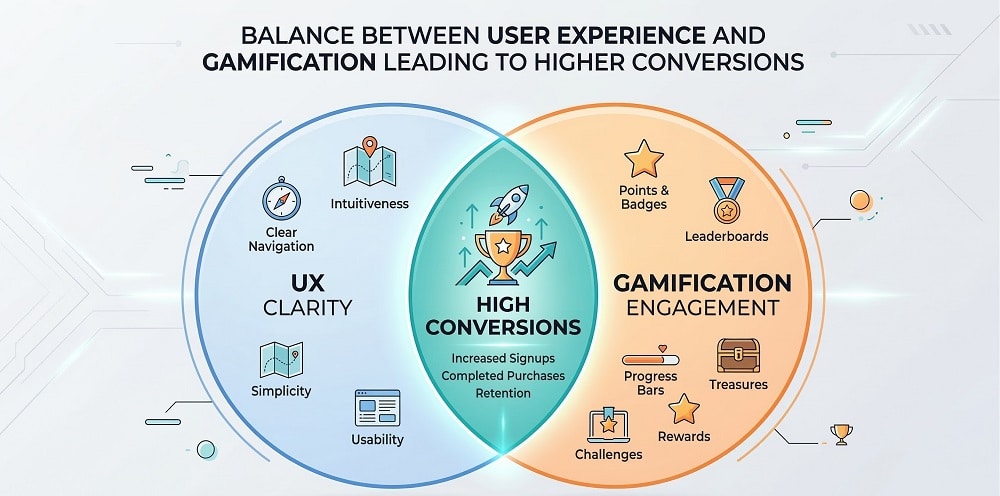
Strong user experience should always come first. Gamification is most effective when it supports a clear and simple journey.
Users should be able to understand the competition, select tickets and complete payment without confusion. Gamification elements should guide and enhance this process.
Clarity should never be sacrificed for creativity. If users cannot quickly understand what to do, engagement will drop.
The most successful competition websites use gamification subtly. They integrate it into the experience rather than layering it on top.
When UX and gamification work together, the result is a smooth, engaging and high converting platform.
How Gamification Impacts Conversion Rates
Gamification is not just about engagement. It directly affects how users behave and whether they complete an action.
When users feel involved in the process, they spend more time on the website. Increased time on site allows more opportunities to present value, build trust and encourage entry.
Gamification also reduces hesitation. Elements such as countdown timers, progress indicators and limited time rewards push users toward quicker decisions. Instead of delaying, users act in the moment.
Repeat participation is another key outcome. Loyalty rewards, streaks and referral systems give users a reason to return. This reduces the need to constantly acquire new users and improves long term profitability.
Gamification also improves perceived value. When the experience feels interactive and rewarding, users are more likely to justify spending on entries.
The result is a measurable impact on:
- Conversion rates
- Average number of entries per user
- Customer lifetime value
- Repeat engagement
When applied correctly, gamification turns passive visitors into active participants.
Advanced Gamification Strategies for Scaling Platforms
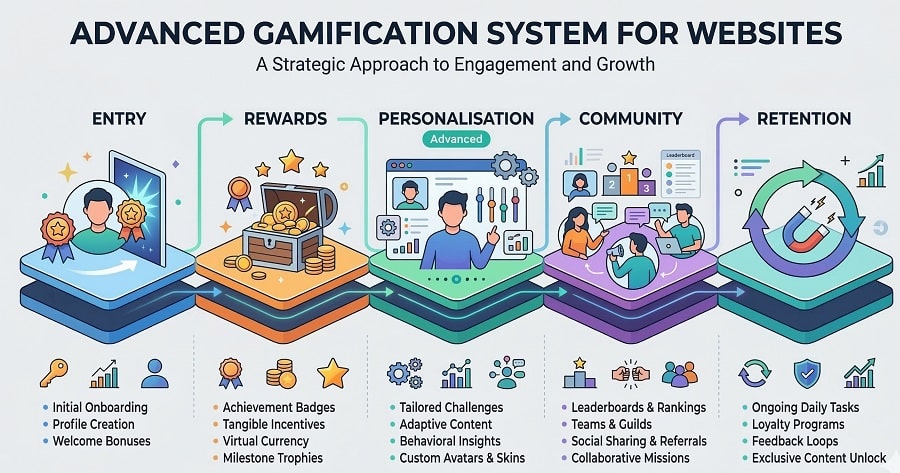
Once basic gamification elements are in place, competition websites can introduce more advanced strategies to support long term growth.
1. Tiered Reward Systems
Tiered rewards provide increasing benefits based on user activity. For example, users who enter multiple competitions could unlock higher bonuses or exclusive competitions.
This creates a sense of progression and encourages deeper engagement over time.
2. Personalised Experiences
Personalisation allows gamification elements to adapt to individual users. Returning participants might see tailored offers, reminders or rewards based on their previous behaviour.
This makes the experience feel more relevant and increases the likelihood of repeat entries.
3. Event Based Campaigns
Limited campaigns tied to specific events or dates can increase urgency and engagement. For example, seasonal competitions or special promotions can be enhanced with gamified elements such as bonus entry windows.
These campaigns create spikes in activity and keep the platform feeling dynamic.
4. Community Engagement Features
Building a sense of community can strengthen loyalty. Features such as public winner announcements, social sharing or user generated content create a shared experience.
Participants feel part of something larger rather than just completing a transaction.
Why These UX and Gamification Mistakes Happen
Many competition websites fail to implement gamification effectively, not because the concept is difficult, but because the process lacks structure.
Template based builds are a common cause. These platforms often prioritise speed over strategy. As a result, user journeys are not designed with engagement in mind.
Another issue is focusing too heavily on visual design. A website may look impressive but fail to guide users toward action. Without a clear strategy, gamification elements become decorative rather than functional.
Lack of testing also contributes to poor performance. Without analysing user behaviour, businesses cannot identify which elements improve engagement and which create friction.
Rushed development often leads to incomplete implementation. Features may be added without considering how they affect the overall user journey.
Understanding these causes helps businesses avoid repeating the same mistakes.
How Design Hero Builds Gamified Competition Websites
Design Hero approaches gamification as part of a wider conversion strategy. The goal is not to add features for the sake of engagement, but to improve performance.
The process begins with understanding the audience. Knowing how users interact with competition websites allows the platform to be designed around real behaviour.
Gamification elements are then integrated into the user journey. Countdown timers, progress indicators and rewards are placed strategically to guide users toward entry without creating friction.
Mobile performance is prioritised. Since a large proportion of users enter competitions on mobile devices, every interactive element is designed to work smoothly on smaller screens.
Technical performance is also critical. Gamification features must load quickly and function reliably to maintain trust.
Clients benefit from a single point of contact, ensuring that strategy, design and development remain aligned throughout the project.
The result is a competition platform that feels engaging, trustworthy and easy to use, all of which contribute to higher conversion rates.
Quick Gamification Checklist
For competition website owners looking to improve engagement, this checklist provides a simple starting point.
- Are users encouraged to take action through clear visual cues
- Is urgency visible through timers or limited availability
- Are rewards clearly communicated to users
- Does the experience feel interactive rather than static
- Are gamification elements simple and easy to understand
- Does everything work smoothly on mobile devices
- Are repeat users incentivised to return
If several of these elements are missing, there is a clear opportunity to improve performance.
Bringing It All Together
Gamification works because it aligns with human behaviour. People respond to progress, rewards and urgency. Competition websites already contain these elements at a basic level. The opportunity lies in enhancing them.
The most effective platforms do not rely on one technique. They combine multiple elements to create a smooth and engaging experience. Users feel guided, rewarded and motivated to act.
At the same time, simplicity must remain a priority. The entry process should always feel clear and fast. Gamification should support the journey, not complicate it.
When implemented correctly, gamification transforms how users interact with a competition website. It increases engagement, improves conversion rates and encourages repeat participation.
Conclusion
Competition websites have a natural advantage. The model already creates excitement and anticipation. Gamification amplifies these qualities and turns them into consistent growth drivers.
By introducing simple, strategic elements such as timers, rewards and progress indicators, businesses can significantly improve engagement and ticket sales.
For UK competition platforms aiming to scale, the focus should be on creating an experience that feels interactive, trustworthy and easy to use.
Design Hero builds competition websites with this balance in mind. By combining strong UX with carefully implemented gamification, platforms are designed to convert visitors into participants and keep them coming back.
If your competition website is not delivering the results you expect, it may not be a traffic problem. It may be an engagement problem.
Improving how users interact with your platform could be the difference between steady growth and stalled performance.