

What a Website is Meant to Do
Before looking at warning signs, it helps to reset expectations.
A business website is not just an online brochure. It is not there to exist quietly in the background. It has a job to do.
At a minimum, a good website should:
- Attract the right type of visitor
- Build trust quickly
- Explain what you do clearly
- Guide visitors towards a next step
- Convert interest into enquiries
Traffic alone means nothing if none of it turns into conversations.
If visitors leave without understanding your offer or knowing what to do next, the website is failing at its core purpose.
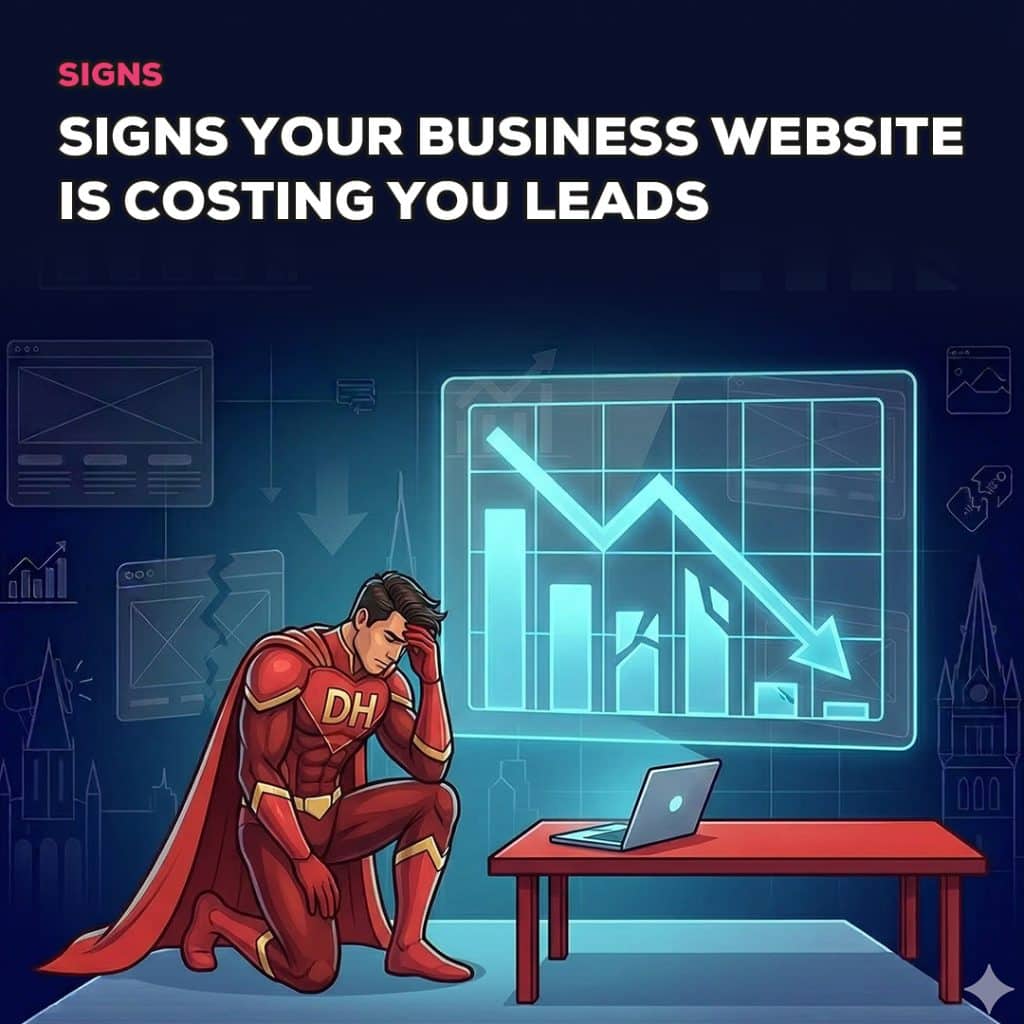
Key Signs Your Business Website Is Costing You Leads
Below are the most common signs we see on underperforming business websites. Each one may seem small on its own, but together they quietly drain enquiries every day.
1. Visitors leave quickly
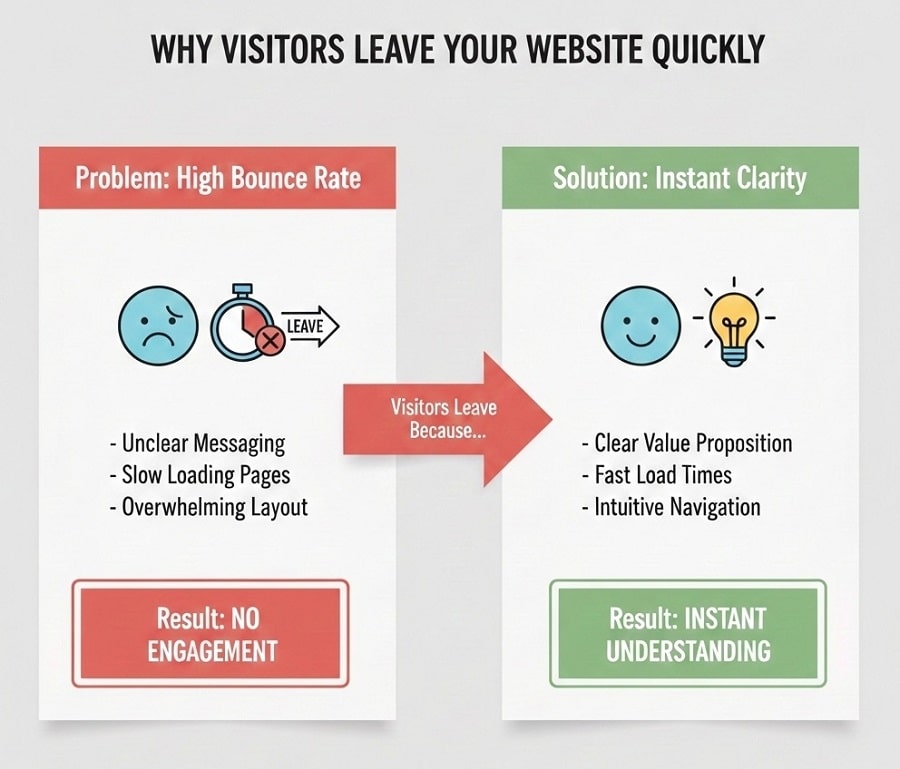
If people land on your website and leave almost immediately, something is wrong.
This often shows up as high bounce rates or very short session times. Visitors are not engaging because the site does not meet their expectations fast enough.
Common causes include unclear messaging, slow loading pages or a layout that overwhelms rather than guides.
What should happen instead is simple. Visitors should quickly understand what you offer, who it is for and why it matters. When that clarity is missing, they leave.
2. There is no clear call to action
Many websites forget to tell visitors what to do next.
Pages are full of information, but there is no obvious next step. No invitation to enquire. No prompt to book a call. No guidance at all.
When users are unsure what action to take, they usually take none.
A strong website guides behaviour. Calls to action should feel natural, visible and aligned with the page content. They are not pushy. They are helpful.
3. Your messaging is confusing
If visitors cannot quickly understand what you do, they will not enquire.
This often happens when websites rely on jargon, vague claims or internal language. Phrases like “innovative solutions” or “bespoke services” sound impressive but say very little.
Confusing messaging forces visitors to work harder than they want to. Most will not bother.
Clear messaging focuses on problems, outcomes and real benefits. It should answer questions, not raise new ones.
4. The mobile experience is poor
Most business websites now receive the majority of their traffic from mobile devices.
Despite this, many are still designed with desktop in mind first. On mobile, text is too small, buttons are hard to tap and forms are frustrating to complete.
A poor mobile experience quietly kills leads. Visitors may be interested, but the effort required to enquire feels too high.
A website that works well on mobile removes friction and respects the user’s time.
5. Pages load slowly
Speed matters more than many businesses realise.
Slow loading pages create impatience and doubt. Visitors question whether the business is professional or reliable before they have even seen the content.
Even small delays can increase abandonment, especially on mobile networks.
A fast website feels modern and trustworthy. A slow one does the opposite.
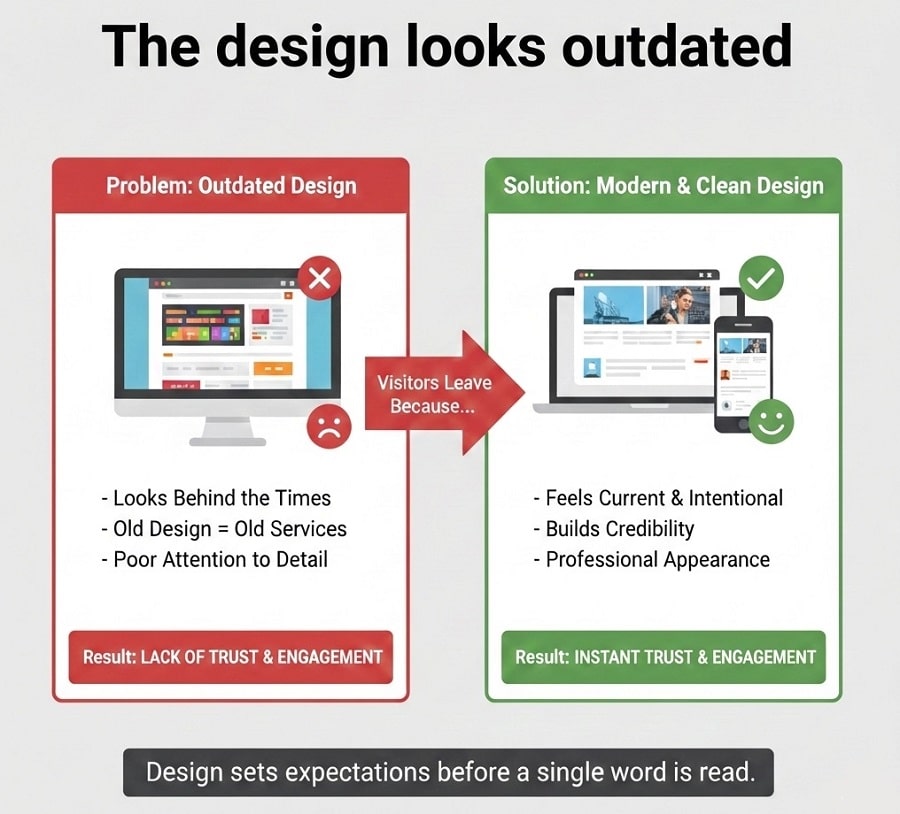
6. The design looks outdated
Design trends change, but this is not about chasing fashion.
An outdated website makes a business look behind the times. Visitors subconsciously associate old design with outdated services or poor attention to detail.
This does not mean constant redesigns are necessary. It means the website should feel current, clean and intentional.
Design sets expectations before a single word is read.
7. Trust signals are missing or weak
Trust is essential for enquiries.
If your website lacks testimonials, reviews, case studies or clear contact details, visitors hesitate. They want reassurance that you are real and competent.
Weak trust signals force visitors to take a leap of faith. Most will not.
Strong trust signals reduce perceived risk and make reaching out feel safe.
8. Forms ask for too much information
Long forms kill conversions.
When a form asks for excessive detail upfront, visitors feel interrogated rather than invited. This is especially damaging on mobile.
The goal of a form is to start a conversation, not complete a questionnaire.
Short, focused forms perform better and generate more enquiries.
9. Navigation feels cluttered
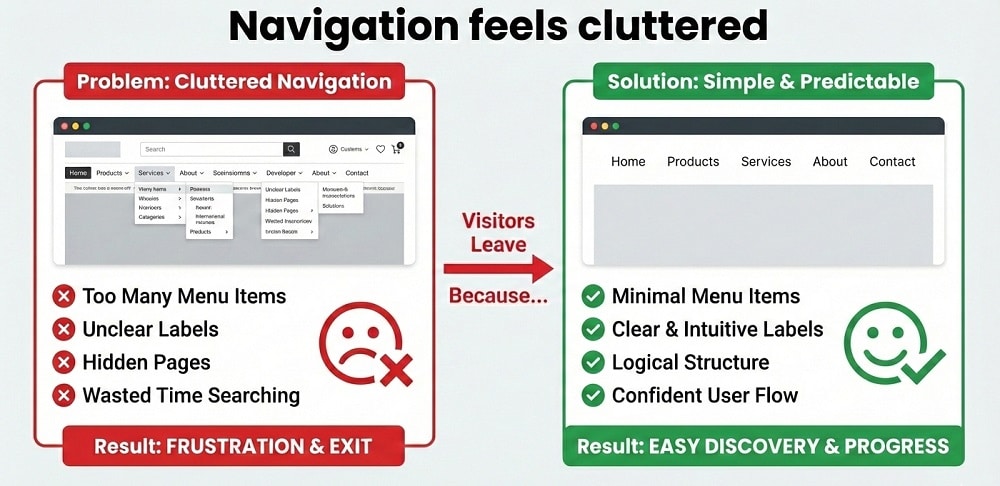
When navigation is overloaded, users struggle to find what they need.
Too many menu items, unclear labels or hidden pages all create friction. Visitors waste time searching instead of progressing.
Good navigation is simple and predictable. It helps users move confidently through the site.
10. The website feels generic
A generic website blends into the background.
If your site could belong to almost any business in your industry, it fails to differentiate. Visitors have no reason to choose you over competitors.
Personality, positioning and clarity help a website stand out. Without them, interest fades quickly.
Why These Issues Often Go Unnoticed
One of the hardest parts about website performance issues is that they rarely announce themselves clearly. Most business owners do not wake up and think their website is losing leads. They simply feel that results are not where they should be.
There are a few reasons these problems slip under the radar.
First, business owners get used to their own website. When you see the same pages every day, it becomes difficult to spot confusion or friction. What feels obvious to you is often unclear to a first time visitor.
Second, many designers focus on how a site looks rather than how it performs. A website can look clean and professional while still failing to guide users properly. Visual approval does not equal conversion success.
Third, tracking is often missing or incomplete. Without clear data on bounce rates, form submissions, session times and conversion paths, it is hard to see where leads are being lost. Decisions end up being made on gut feeling rather than evidence.
Finally, feedback from friends and family is misleading. People who already know your business are not representative of real visitors. They understand what you do and how to contact you. New users do not.
How Much These Issues Really Cost
Underperforming websites rarely fail dramatically. Instead, they fail quietly.
A few missed enquiries a week may not feel serious. Over a year, it adds up quickly.
Missed leads mean missed opportunities. That might be projects that never start, customers who choose competitors or conversations that never happen. Over time, this slows growth and creates frustration.
Poor conversion also wastes marketing spend. If you are paying for ads, SEO or content, but the website does not convert, you are effectively paying to send people away.
Low quality leads are another hidden cost. When messaging is unclear or trust is weak, the enquiries that do come through are often poorly matched. This leads to time wasted on unsuitable prospects.
The biggest cost is momentum. A website that fails to support growth holds the business back without making it obvious why.
How Design Hero Fixes Lead Killing Websites
Fixing a website that is costing you leads does not start with colours or layouts. It starts with understanding.
At Design Hero, we begin by looking at what the website is meant to achieve and where it is falling short. This includes reviewing messaging, structure, user journeys and conversion paths.
Strategy comes first. We clarify who the website is for, what problem it solves and what action visitors should take. Without this clarity, design decisions become guesswork.
Messaging is then refined to be clear, specific and human. We focus on outcomes rather than buzzwords. Visitors should understand the offer quickly and feel confident about the next step.
Design supports the message rather than competing with it. Layouts are built to guide attention, reduce friction and highlight trust signals at the right moments. Every element earns its place.
Conversion is built into the structure. Calls to action are clear. Forms are streamlined. Mobile users are prioritised. Speed and usability are treated as essentials, not afterthoughts.
Clients deal with one point of contact throughout. Clear communication and accountability are part of the process, not a bonus.
Want to upgrade your website and generate more leads Contact Design Hero
Quick Lead Loss Website Audit
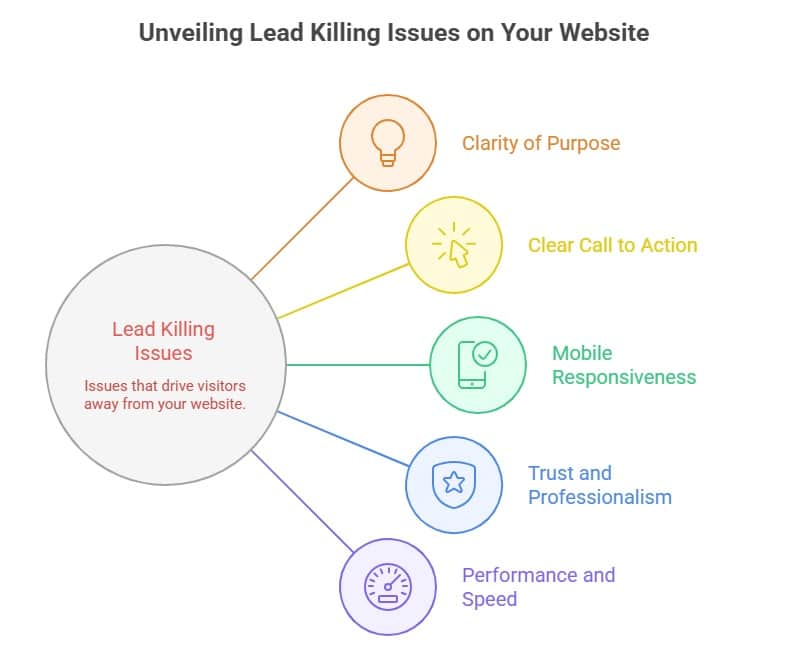
You can spot many lead killing issues with a simple self audit. Try answering these questions honestly.
- Can a new visitor understand what you do within a few seconds of landing on the site?
- Is there a clear and obvious next step on every key page?
- Does the website work smoothly on a mobile phone without frustration?
- Does the site feel trustworthy and professional at first glance?
- Do pages load quickly and behave as expected?
If you hesitate on several of these, your website is likely costing you leads.
Conclusion
A business website should help you grow, not quietly hold you back.
Many businesses lose leads every day without realising it. The signs are there, but they are easy to ignore until frustration builds.
The good news is that these issues are fixable. Clear messaging, thoughtful design and a focus on conversion can transform an underperforming website into a genuine asset.
If you suspect your website might be costing you leads, it is worth taking an honest look. Small improvements often make a big difference.
Design Hero helps businesses across Scotland and the UK turn underperforming websites into lead generators. If you want clear, practical advice on improving your website’s performance, we are always happy to talk things through.