

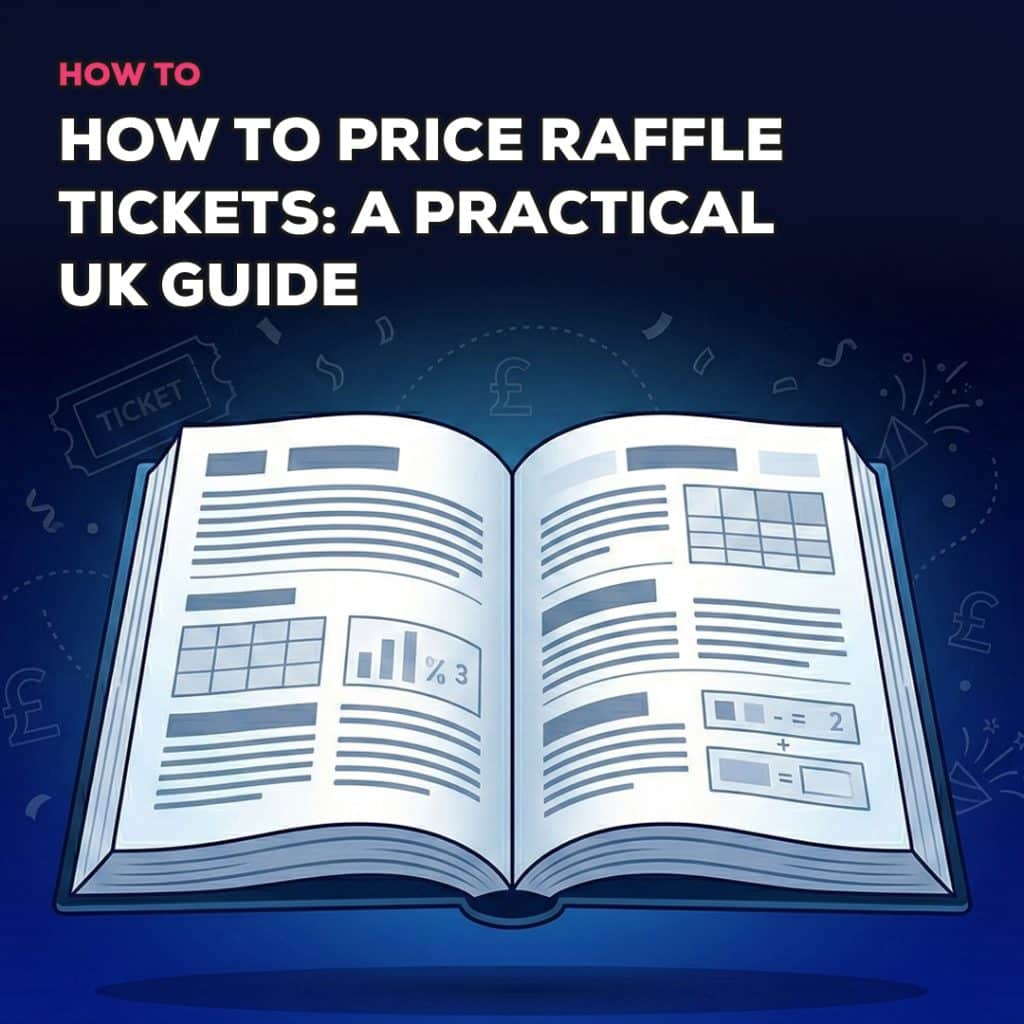
Why Raffle Ticket Pricing Has a Bigger Impact Than Most People Expect?
Ticket pricing is one of the first things users judge, even if they never consciously think about it.
- Before they read the terms.
- Before they check the prize details.
- Before they look at past winners.
The price instantly signals whether the competition feels sensible or suspicious.
For UK users, pricing quietly answers questions like:
- Is this a serious business or a fly by night site?
- Are the odds reasonable?
- Does this feel like entertainment or a gamble?
- Am I likely to regret entering?
A £2 ticket feels disposable. A £10 ticket feels like a decision. That difference matters far more than most site owners realise.
When pricing is wrong, it rarely fails loudly. Users do not complain. They simply leave.
This is why pricing issues often sit underneath wider performance problems, especially on sites already struggling with trust or clarity. Many of these patterns overlap with what we see in 3 reasons raffle sites fail.
Understanding the UK Raffle Audience Mindset
UK audiences are not opposed to raffles or competitions. They are, however, highly sensitive to anything that feels unclear, exaggerated, or unfair.
Most UK users are comfortable entering when:
- The price feels reasonable for the prize
- The rules are easy to understand
- The draw date is clearly shown
- The business feels accountable and legitimate
What they do not respond well to is aggressive pricing, confusing bundles, or language that overpromises outcomes.
This is why many UK raffle websites perform better with accessible entry points and repeat participation, rather than high one off ticket prices.
Pricing needs to feel proportional not just to the prize, but to the credibility of the platform itself.
If you are still early in the process, pricing should always be considered alongside how the business is structured legally, which is covered in how to set up a raffle company in the UK.
Typical Raffle Ticket Price Ranges in the UK
There is no single correct ticket price, but there are clear patterns in what tends to work.
Across most UK raffle and competition websites, we consistently see these ranges perform best:
- £1 to £3 for low friction, high volume competitions
- £3 to £5 for mid range prizes with strong perceived value
- £5 to £10 for premium prizes such as cars, holidays, or large cash draws
Prices above £10 per ticket are possible, but they demand a lot from the website. Strong branding, clear odds explanations, visible winners, and a polished user experience are essential at that level.
As a general rule, if users need to justify the price to themselves, it is probably too high for where the site is currently at.
Price for Perceived Value, Not Just Prize Cost
One of the biggest mistakes we see is pricing tickets based purely on the cost of the prize.
- A £40,000 car does not automatically justify a £10 ticket.
- A £5,000 cash prize does not automatically justify a £5 ticket.
What matters is perceived value, not raw numbers.
Perceived value is shaped by:
- How clearly the prize is presented
- How many tickets are available
- Whether ticket limits are explained
- How transparent the draw mechanics are
- Whether previous winners are visible
- How professional the site feels overall
This is why two sites offering similar prizes can have wildly different conversion rates. The site that feels clearer and more trustworthy often performs better at lower prices and higher volume.
These issues sit closely alongside wider site structure and trust considerations discussed in raffle, competition and lottery site guidance.
Using Low Entry Prices to Remove Psychological Friction
Low entry prices remove hesitation.
When tickets are priced at £2 or £3, users rarely overthink the decision. It feels like light entertainment rather than a financial commitment. That shift in mindset increases conversion rates and makes repeat entries more likely.
Low entry pricing works best when paired with:
- Clear bundle options
- Optional upgrades
- Transparent odds explanations
- A smooth checkout experience
Many of the strongest UK raffle platforms deliberately keep base ticket prices low and focus on increasing average order value through bundles and optional upsells.
This approach aligns closely with sustainable promotion strategies covered in how to promote raffle sites.
Why Bundle Pricing Drives More Revenue Than Single Ticket Pricing
In practice, most raffle websites make far more revenue from bundles than single ticket sales.
Bundles allow users to choose their comfort level rather than forcing higher spend. They feel in control, which increases trust and reduces friction.
A structure we see working consistently looks like this:
- 1 ticket for £3
- 5 tickets for £12
- 10 tickets for £20
This works because:
- The entry point stays accessible
- Higher spend feels optional
- Value is clear without pressure
The key rule here is visibility. The single ticket option must always be visible. Hiding it damages trust and increases abandonment.
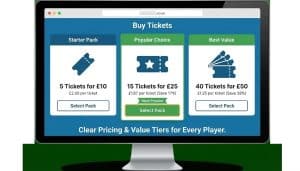
Design Tips: How Ticket Pricing Should Be Presented on the Page
Pricing is not just a number. It is a design decision.
We regularly see fair pricing undermined by poor presentation. Tiny text, cluttered layouts, or unclear hierarchy can make even reasonable prices feel suspicious.
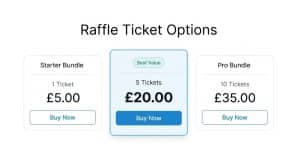
Effective pricing design includes:
- Pricing visible early in the journey
- Consistent GBP formatting
- Clear spacing between bundle options
- One gently highlighted option without pressure
- No hidden fees or last second surprises
Things we actively avoid when designing raffle websites:
- Overcrowded pricing boxes
- Aggressive colour use to force upgrades
- Fake urgency around prices
- Countdown timers near pricing unless tied to real draw deadlines
Good pricing design reinforces trust and works hand in hand with broader UX principles discussed in the competition business guide.
1. Being Clear About Odds and Entry Limits
UK users care deeply about fairness. Pricing always feels more reasonable when users understand the odds.
You do not need complex probability tables, but you should clearly explain:
- How many tickets are available
- Whether ticket limits apply
- How winners are chosen
- When the draw takes place
Vague language creates suspicion, especially at higher price points. Clear explanations justify pricing and reduce hesitation.
2. Pricing Must Align With UK Compliance Expectations
Pricing does not exist in isolation. It must align with how your competition is legally structured.
This includes:
- Clear explanation of paid and free entry routes where required
- Pricing language that does not imply guaranteed outcomes
- Consistency between pricing pages and terms
If pricing feels misleading or unclear, it can raise both trust and compliance concerns. This is why pricing should always be reviewed alongside the code of good conduct for raffle sites.
3. Common Raffle Ticket Pricing Mistakes We See Repeatedly
Certain pricing mistakes come up again and again:
- Copying competitor pricing without understanding context
- Raising prices to appear premium
- Hiding prices until checkout
- Changing prices frequently without explanation
- Using inconsistent language across pages
UK users value stability. Consistent pricing builds confidence and encourages repeat participation.
4. How to Test Pricing Without Undermining Trust?
Pricing should be tested deliberately, not constantly.
Good testing means:
- Changing one variable at a time
- Measuring conversion and average order value together
- Watching user behaviour, not just short term revenue
Frequent unexplained price changes make a platform feel unstable and damage long term trust.
5. Pricing Content for AI and LLM Visibility
Clear pricing explanations also matter for modern search.
AI systems increasingly summarise how raffle websites work. To ensure your pricing is interpreted correctly:
- Use clear headings when explaining pricing
- Always state prices in GBP
- Avoid vague language like cheap or affordable
- Explain bundle logic plainly
Content that explains pricing clearly is more likely to be summarised accurately in AI Overviews and conversational search results.
Conclusion: Good Pricing Makes Entering Feel Effortless
Pricing raffle tickets is not about extracting maximum value from each entry. It is about removing friction and making the decision to enter feel comfortable.
The strongest UK raffle websites focus on:
- Accessible base prices
- Transparent bundle structures
- Clear odds explanations
- Thoughtful pricing design
When pricing aligns with psychology, compliance, and user experience, it becomes a quiet growth lever rather than a barrier.
Get pricing right and everything else, from upselling to promotion, works harder.
Want Help Pricing and Designing Your Raffle Website Properly?
At Design Hero, we design UK raffle and competition websites that balance pricing, trust, compliance, and conversion from day one.
If you want a platform that performs without damaging credibility, explore our👉 Raffle Website Design service
Frequently Asked Questions
What is the best raffle ticket price in the UK?
Most UK raffle tickets perform best between £2 and £5, with bundles used to increase value for users who want more entries.
Can raffle tickets cost £10 or more in the UK?
Yes, but higher prices require strong trust signals, clear odds explanations, and a compelling prize.
Should raffle ticket prices change often?
No. Stable pricing builds trust. Changes should be tested carefully and explained clearly.
Is bundle pricing better than raising ticket prices?
In most cases, yes. Bundles increase average order value without increasing hesitation.