

Quick Answer: Typical Timeline to Build a Website in Glasgow
For most Glasgow businesses, website timelines fall into three categories:
- Small brochure website: 3 to 5 weeks
- Standard business website: 6 to 10 weeks
- Large or custom website: 10 to 16+ weeks
These are realistic ranges based on structured projects, not rushed builds.
Why Timelines Vary So Much
No two website projects are the same.
Timelines depend on:
- Number of pages
- Design complexity
- Content readiness
- Required functionality
- Feedback speed
A well-prepared project can move quickly.
A delayed project often comes down to decision bottlenecks. which breaks down how different business models influence website requirements.
The Website Design Process (Step-by-Step Timeline)
Understanding the process helps explain the timeline.
1. Discovery and Planning (Week 1 to 2)
This is where the foundation is set.
What Happens Here
- Understanding your business goals
- Defining your target audience
- Planning website structure
- Identifying key pages
Why This Stage Is Critical
Skipping or rushing this stage leads to:
- Confusing structure
- Weak messaging
- Poor user experience
A strong plan speeds up everything that follows.
2. Wireframing and UX Structure (Week 2 to 3)
Before design begins, structure is mapped out.
What This Includes
- Page layouts
- User journey planning
- Content positioning
Why This Matters
Wireframes ensure:
- Clear flow
- Logical structure
- Better conversions
This stage prevents costly revisions later.
3. Website Design (Week 3 to 5)
This is where visual design comes in.
What Happens Here
- Branding integration
- Visual styling
- UI design
What Affects Timeline
- Number of design revisions
- Complexity of design
- Feedback speed
Key Insight
Clear feedback speeds up this stage significantly.
Delays usually happen when decisions take too long.
4. Development and Build (Week 5 to 8)
Once designs are approved, development begins.
What Happens Here
- Building pages
- Integrating CMS
- Adding functionality
- Optimising performance
Why This Takes Time
This stage involves:
- Technical work
- Testing
- Compatibility checks
If your website involves payments or transactions, choosing the right system is critical. This guide explains 👉 how to choose a payment gateway
5. Content Integration and SEO (Week 6 to 9)
Content plays a major role in timelines.
What Happens Here
- Adding website content
- Optimising for SEO
- Structuring pages for search intent
Common Delay
Content is often the biggest bottleneck.
If content is not ready, timelines extend.
Why This Matters
Content affects:
- SEO
- conversions
- user experience
If you are planning content strategy, this guide on 👉 how to promote a raffle website explains how content supports visibility and growth.
6. Testing and Refinement (Week 8 to 10)
Before launch, everything is tested.
What Gets Checked
- Mobile responsiveness
- Speed and performance
- Functionality
- User experience
Why This Stage Matters
This ensures:
- No errors
- Smooth performance
- Better first impression
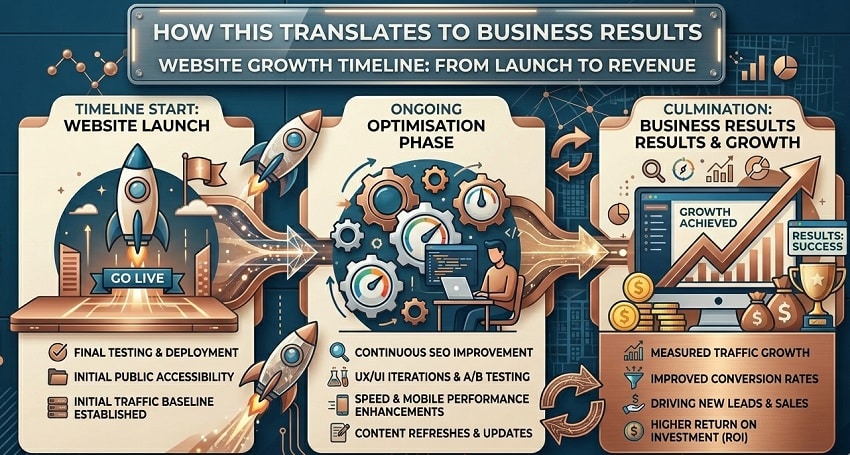
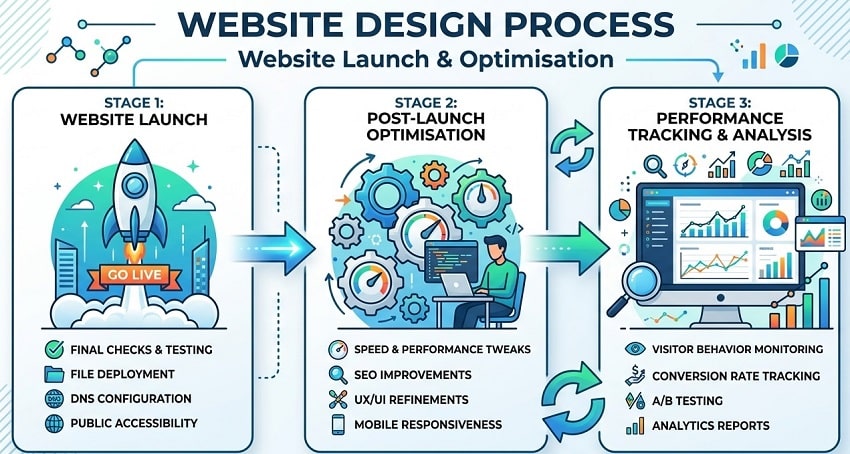
7. Launch and Post-Launch Optimisation (Week 10+)
Launch is not the end.
It is the start of improvement.
What Happens After Launch
- Performance monitoring
- SEO adjustments
- Conversion optimisation
- Key Insight
High-performing websites are improved continuously.
What Affects Website Timelines the Most
Website timelines are not random.
They are shaped by a few key factors that influence how smoothly a project moves from planning to launch.
Understanding these early helps you avoid delays and set realistic expectations.
1. Content Readiness
Content is one of the biggest factors affecting timelines.
It is also the most common cause of delays.
Why Content Slows Projects Down
Many businesses start a website project without finalised content.
They assume it can be written later.
In reality, content affects:
- Page structure
- Design decisions
- SEO optimisation
- User experience
Without content, progress slows across multiple stages.
- What This Looks Like in Practice
- Pages cannot be fully designed
- Developers wait for final text and images
- Revisions increase because messaging is unclear
This creates a stop-start workflow.
How to Avoid Delays
- Prepare content before the project begins
- Define key messages early
- Prioritise core pages first
Even partial content is better than none.
Key Insight
Content is not just something you add at the end.
It is a core part of the build process.
2. Decision Speed
Decision-making speed has a direct impact on how fast your website gets built.
Where Delays Typically Happen
- Approving designs
- Reviewing layouts
- Providing feedback
- Signing off on changes
Even small delays at each stage can add up.
Why This Happens
- Multiple stakeholders involved
- Unclear direction
- Overthinking design choices
The Impact on Timelines
When feedback takes days or weeks:
- Progress slows
- Development pauses
- Deadlines shift
How to Improve This
- Assign a clear decision-maker
- Provide feedback quickly
- Keep feedback focused and specific
Key Insight
Projects move at the speed of decisions.
Faster decisions lead to faster delivery.
3. Project Scope
The size and complexity of your website directly affect how long it takes to build.
What Defines Scope
- Number of pages
- Features and functionality
- Integrations
- Custom requirements
Why Scope Matters
A simple 5-page website is very different from:
- An eCommerce platform
- A membership site
- A custom web application
Each additional feature increases:
- Development time
- Testing requirements
- Complexity
- Common Scope Mistakes
- Underestimating requirements
- Adding features mid-project
- Expanding the project without adjusting timelines
How to Manage Scope Effectively
- Define requirements clearly at the start
- Prioritise essential features
- Avoid adding new elements mid-build
Key Insight
Clear scope leads to predictable timelines.
Unclear scope leads to delays.
4. Design Complexity
The level of design customisation has a significant impact on timelines.
- Simple vs Custom Design
- Template-based design is faster
- Fully custom design takes longer
Custom designs require:
- More planning
- More revisions
- More detailed development
- What Increases Design Time
- Unique layouts for each page
- Advanced animations or interactions
- Multiple design variation
- Extensive branding requirements
Why This Matters
More complexity means:
- More decision-making
- More refinement
- More development work
- Finding the Right Balance
Not every project needs full customisation.
A well-structured design with focused improvements often performs better than an overly complex one.
Key Insight
Design should support performance, not slow it down.
5. Developer Workflow
The way a project is managed and executed has a major impact on timelines.
Structured vs Unstructured Workflow
A structured workflow includes:
- Clear stages
- Defined processes
- Regular updates
An unstructured workflow often leads to:
- Confusion
- Rework
- Delays
What a Strong Workflow Looks Like
- Clear timelines for each stage
- Defined feedback loops
- Efficient communication
- Proper testing before launch
Why Workflow Matters
Even a simple project can be delayed by poor organisation.
A well-managed project can deliver faster without compromising quality.
The Role of Experience
Experienced teams:
- Anticipate challenges
- Avoid common mistakes
- Keep projects moving efficiently
Key Insight
The process is just as important as the output.
A strong workflow leads to faster, smoother delivery.
One-Time Build vs Ongoing Improvement
Most Glasgow businesses approach website projects with one goal.
Launch the site and move on.
But in 2026, that approach is limiting.
The real difference in results comes from what happens after the website goes live.
1. One-Time Build
A one-time build focuses on getting the website designed, developed, and launched.
Once live, changes are minimal or reactive.
What This Approach Includes
- Initial design and development
- Basic SEO setup
- Content integration
- Launch-ready website
After this, the website is considered complete.
What Happens After Launch
Over time:
- Content becomes outdated
- Performance slowly declines
- SEO opportunities are missed
- Conversion rates plateau
The website still works, but it does not improve.
Limitations of a One-Time Build
- No ongoing optimisation
- Issues are fixed only when they appear
- No structured performance tracking
- Limited long-term growth
Real Business Impact
With a one-time build:
- Traffic may increase slightly
- Conversions remain inconsistent
- Growth depends heavily on external marketing
The website becomes static instead of strategic.
2. Ongoing Optimisation
Ongoing optimisation treats your website as a system that evolves over time.
Instead of stopping at launch, it focuses on continuous improvement.
What This Approach Includes
- Regular performance monitoring
- UX improvements based on user behaviour
- SEO updates and optimisation
- Conversion rate optimisation
- Technical maintenance
3. What Happens Over Time
The website improves gradually:
- Pages load faster
- User journeys become smoother
- Content becomes more targeted
- Conversion rates increase
Each improvement builds on the previous one.
Why This Matters in 2026
- User expectations change.
- Competitors improve.
- Search engines update
Without ongoing optimisation, your website falls behind.
Real Business Impact
With ongoing optimisation:
- Traffic becomes more consistent
- Conversion rates improve steadily
- Marketing ROI increases
- Revenue becomes more predictable
- The Compounding Effect
Small improvements over time lead to significant results.
For example:
- Slight speed improvements increase engagement
- Better UX increases conversions
- Stronger SEO increases visibility
Together, these changes create measurable growth.
How This Translates to Business Results
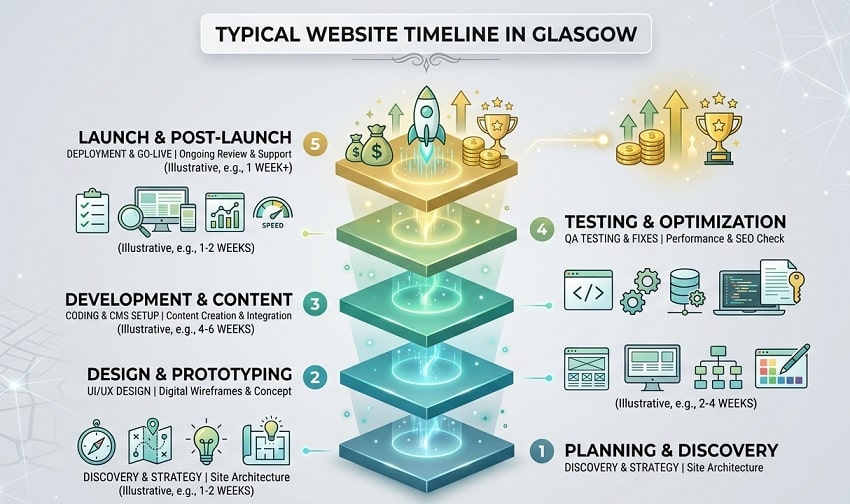
Website performance improvements are not just technical.
They directly impact how your business grows over time.
1. Short-Term
- Website launched successfully
- Stronger first impression
- Online presence established
2. Mid-Term
- Increased traffic from SEO and marketing
- Better user engagement and time on site
- More consistent lead generation
3. Long-Term
- Higher conversion rates
- Improved return on investment
- More predictable and scalable growth
Conclusion
Building a website is not just about speed.
It is about building something that actually performs.
Many Glasgow businesses are tempted to prioritise fast delivery.
But a rushed website often leads to:
- Poor performance
- Lower conversion rates
- Ongoing technical issues
- Missed growth opportunities
The reality is simple.
A website that is built quickly without proper planning, structure, and optimisation will almost always need to be rebuilt or heavily improved later.
That is where time and budget are lost.
Why Taking the Right Approach Matters
A well-structured website takes more time because it includes:
- Clear strategy and planning
- Conversion-focused UX
- SEO-ready structure
- Performance optimisation from the start
These are not optional extras.
They are what turn a website into a business asset.
If you want to understand how performance directly impacts visibility and long-term growth, this guide on SEO benefits for business websites explains why structure and optimisation matter beyond launch.
The Long-Term Advantage
When a website is built properly from the beginning, it delivers:
- Faster performance across devices
- Better user experience
- Higher conversion rates
- More consistent lead generation
Over time, these advantages compound.
Instead of constantly fixing issues, you are improving results.
Want to to build a new website in Glasgow – Contact us for a free Consultation