

What Factors Affect How Long a Website Takes to Build?
Website projects do not all take the same amount of time. Some fly through the process. Others drag on for months. Here are the main factors that influence the timeline.
1. Project size
More pages require more design, more content and more build time. A simple starter site is much faster than a fully custom project with complex functionality.
2. Content readiness
If you already have copy, images and brand assets, everything moves quicker. If content needs to be written, approved or gathered from scratch, timelines extend.
3. Communication speed
Fast replies keep momentum high. Slow communication from either side will delay every stage of the build.
4. Strategy and research
Websites built on solid strategy take longer up front but save huge time later. When the foundation is clear, the whole project flows.
5. Tools and systems
Professional builders use fast, reliable systems that speed up development. Cheap platforms slow everything down.
6. Experience of the designer
Experienced designers work quicker because they know what clients need before they ask. Inexperienced designers make mistakes that cause delays.
7. Client feedback cycles
Feedback is a normal part of the process. Long gaps between reviews slow everything down. Clear, timely feedback keeps the project moving.
Each of these factors plays a role. Combined, they determine the overall timeline.
Now let’s look at the typical ranges for small business websites in Scotland.
Typical Website Timelines for Small Businesses in Scotland
These timelines are based on hundreds of real projects. Not inflated. Not sugar coated. Just honest deadlines that most small businesses can rely on.
1. Starter Website or landing pages
2 to 3 weeks
A small, affordable website with a handful of pages, or a sales-led landing page.
Clean design.
Focused message.
Limited revision rounds for speed.
Often perfect for trades, freelancers and solopreneurs, and small service businesses
2. Small Business Website
4 to 6 weeks
This is the most common timeline for asmall corporate website design
Enough time for discovery, planned structure, design revisions and proper development. Balanced, structured and realistic.
3. Custom Website
8 to 12 weeks
Larger builds or enterprise sites with more strategy, content layering, UX planning, complex layouts or custom web development.
Needs more thinking time, testing and more development time.
These ranges cover almost every small business project we build at Design Hero.
Anything faster often means corners are being cut.
Anything longer usually means poor communication or weak project management.
The Full Website Building Phases and Timeline
Let’s break down the entire process from start to finish.
Every stage includes: what happens, how long it takes, what slows things down and what makes things faster.
Stage 1. Discovery and Strategy
1 to 2 weeks
What happens
We learn about your business, audience, competition and goals. We clarify brand direction and identify what your customers need from the website.
What slows it down
Unclear goals, missing information or changing direction later.
What speeds it up
Clear answers, fast communication and honest conversations.
Stage 2. Planning and Sitemap
Several days
What happens
We map out page structure, user flow and content requirements. This stage avoids messy builds by getting the architecture right.
What slows it down
Not knowing what pages you need or rewriting the structure multiple times.
What speeds it up
Agreeing early on what must be included and how users should navigate.
Stage 3. Wireframes and UX
1 week
What happens
We plan layout, spacing, hierarchy and how each page functions. This is the blueprint before visuals are applied.
What slows it down
Large committees, unclear direction or skipping UX entirely.
What speeds it up
Trusting the process and focusing on what customers need.
Stage 4. Design
1 to 2 weeks
What happens
We design the homepage first, then adapt the look for inner pages. Visual style, color, typography and personality come together.
What slows it down
Endless revision cycles, indecision or changing the design brief.
What speeds it up
Clear feedback and a defined brand style.
Stage 5. Development
1 to 3 weeks
What happens
We build the site, add functionality, create mobile layouts, add animations and turn the design into a fast, working website.
What slows it down
Complex development features, third party integrations or unclear requirements.
What speeds it up
Approved designs and well prepared assets.
Stage 6. Content Upload
1 week
What happens
Copy, images and call to actions are added to each page. Content is styled, spaced and refined for clarity.
What slows it down
Missing content or content that needs to be rewritten from scratch.
What speeds it up
Providing content early and keeping edits focused.
Stage 7. Testing and Edits
1 week
What happens
We test every page. Browser compatibility, mobile performance, speed, forms, SEO basics and user flow.
What slows it down
Slow feedback or finding issues caused by late stage changes.
What speeds it up
Keeping revisions organized and responding promptly.
Stage 8. Launch
1 to 2 days
What happens
We handle DNS, hosting setup, redirects, launch checks and final polish. The final step before going public.
What slows it down
Hosting issues, missing logins or domain problems.
What speeds it up
Give access early.
Confirm the launch window.
Keep changes minimal during the launch window.
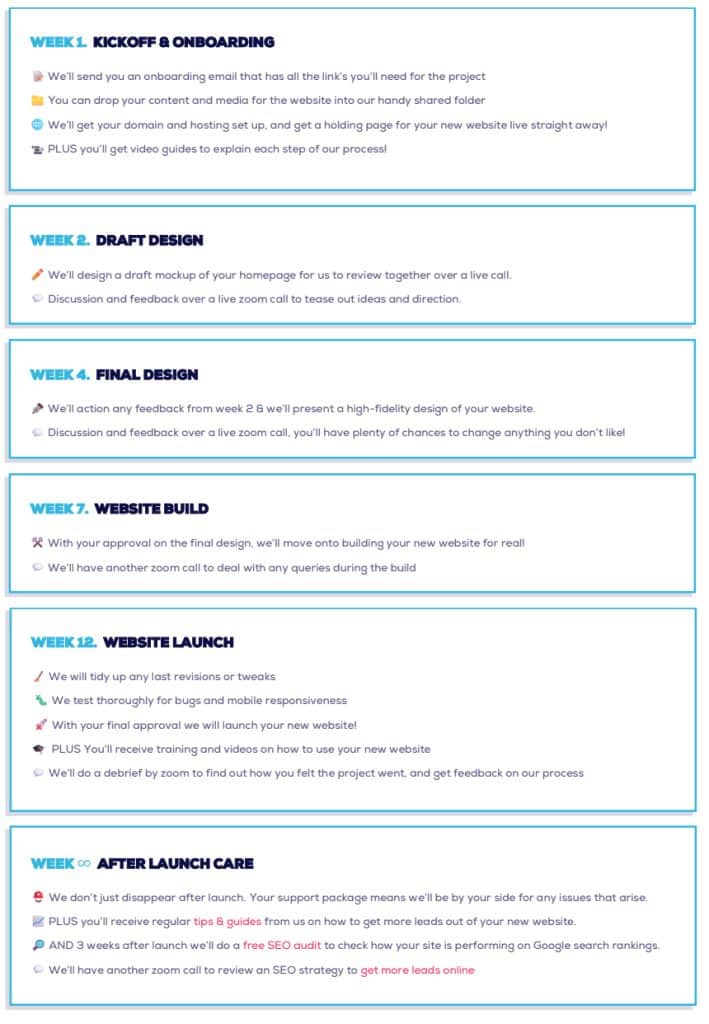
Here’s a typical timeline that we include in our web design quotes:
Common Reasons for website delays No One Talks About
Most delays are not caused by design or development. They come from simple bottlenecks that no one warns clients about. Here are the honest truths.
1. Slow content delivery
A project cannot move forward without copy and images. Content delays are the top cause of slow projects.
2. Agencies going quiet
Some agencies vanish for weeks without warning. Momentum dies and deadlines stretch endlessly.
3. Changing direction halfway
Switching ideas late in the project requires rework that slows everything down.
4. Slow feedback cycles
If feedback takes days or weeks, each stage is delayed. Fast replies keep the project running smoothly.
6. Design by committee
More opinions mean slower decisions. A single decision maker speeds up the entire build.
7. Missing brand assets
Logos, colors and fonts must be ready early. Without them, design cannot begin.
8. Lack of initial strategy
Skipping the early thinking causes chaos later.
Being aware of these delays helps you avoid them. A prepared client makes the entire process faster and smoother.
How Design Hero Keeps Projects on Track
Many clients come to us after dealing with slow, unreliable agencies. We built our entire process around clear communication and fast delivery.
One point of contact
No confusion. No chasing different staff. You speak directly with the expert.
Regular updates
You never wonder what is going on. You always know the status of your project.
No surprises
We tell you what is included and what is not. We avoid hidden extras because clarity keeps everything smooth.
Personal service
Small, dedicated team. No outsourcing. No disappearing acts.
Strategy first approach
We begin with goals and user needs which saves massive time later.
Proven Scottish results delivered on time
We have delivered for trades, charities, start ups, service businesses and growing brands across Scotland and the UK.
When you combine a smart process with personal service, projects finish smoothly and on time.
Clear timeline from day one
You know exactly what is happening, when it is happening and what we need from you.
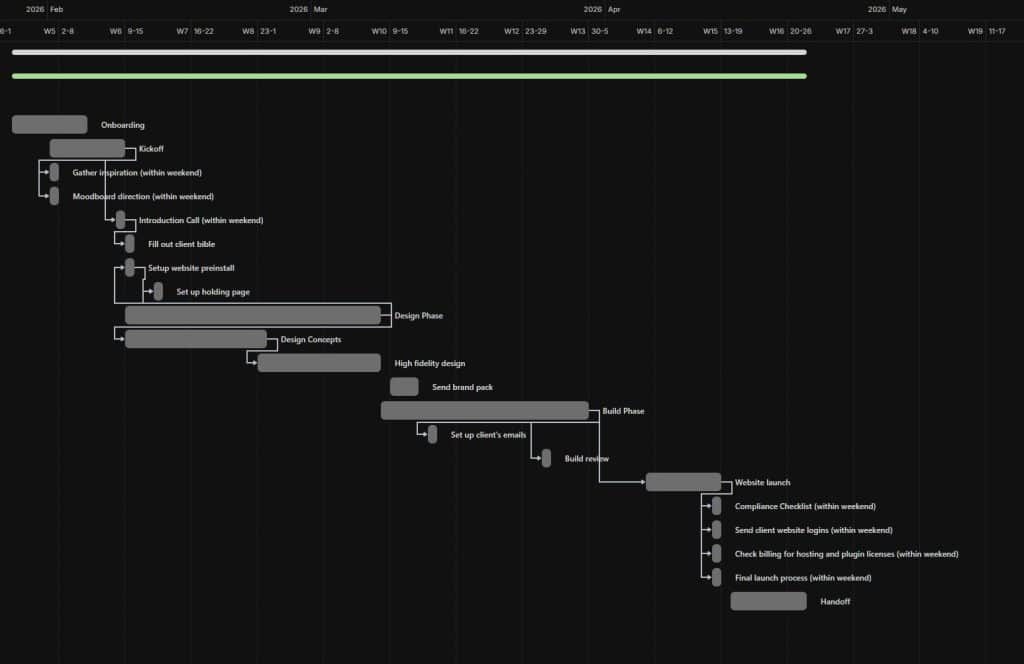
You’ll get access to a live timeline of your web development project, which we update in realtime:
Example of Project Timeline
Here is a simple example of how a four to six week project flows. This is based on real projects for small businesses across Scotland.
Week 1
Discovery session. Goals, audience, brand review. Initial sitemap created.
Week 2
Wireframes and UX planning. Homepage design begins. Feedback and tweaks.
Week 3
Homepage design approved. Inner page designs created. Content gathering starts. Technical setup prepared.
Week 4
Development begins. Site structure built. First mobile layouts prepared. Core pages populated.
Week 5
Content upload and Layout tweaks. Forms configured. Speed and SEO basics applied. Initial testing. Round one edits.
Week 6
Final testing. SEO basics. Final fixes. Hosting and DNS prepared. Go live preparation. Launch and post launch checks.
Could this be faster? Yes, if content is perfect and decisions are instant.
Could this be slower? Yes, if feedback lingers or the scope grows.
But for most Scottish small businesses, this is the sweet spot between quality and speed.
8. When Faster is Possible
Some projects can be completed faster, but only under the right conditions.
Fast timelines work when:
- Content is ready
- Decision making is quick
- The scope is small
- The site is simple
- Branding is already clear
Fast timelines become risky when:
- You rush strategy
- You skip planning
- You skip UX
- You approve designs too quickly
- You cut corners to save time
Why cheap and fast costs more
- Cut price builds often ignore UX, SEO, and performance.
- They look fine on launch day, then sag under real users.
- You pay again to fix the problems that should have been avoided.
Speed is fine as long as quality does not suffer.
Cheap, fast websites often end up costing more because they need to be rebuilt.
Invest in a proper process once.
It will save you money every month the site is live.
Checklist to Build Website Stage by Stage
A quick checklist you can use to keep your project on schedule.
1. Before kickoff
- Choose a decision maker.
- Gather brand assets.
- Agree goals and success metrics.
- Decide on essential pages.
2. Discovery and planning
- Confirm audience and value proposition.
- Approve sitemap and key user journeys.
- Lock requirements to prevent scope creep.
3. Wireframes and UX
- Approve structure, flow, and content hierarchy.
- Do not fret about colors yet.
- Clarity first, polish second.
4. Design
- Approve homepage direction.
- Keep feedback specific and focused on goals.
- Extend decisions to inner pages.
5. Development
- Avoid mid build feature requests.
- Provide access to hosting and domain.
- Share any third party credentials early.
6. Content upload
- Deliver final copy and images.
- Use the content checklist by page.
- Nominate one editor to approve.
7. Testing and edits
- Bundle feedback into one organized list.
- Stick to the scope.
- Sign off when issues are fixed.
8. Launch
- Confirm the launch window.
- Limit changes during propagation.
- Celebrate. Then tell the world.
Website Timeline Questions We Hear Every Week
1. How long does a website take to build for a small business in Scotland?
Most take 4 to 6 weeks with a clean scope and timely feedback. Two to three weeks is possible for a tight starter site.
2. What is the slowest part of a website project?
Content delivery and feedback cycles. When content is late or feedback is vague, everything slows down.
3. Can you start designing while content is being written?
Yes, if we have a solid outline. But the final copy always improves the layout and calls to action.
4. What about copywriting and photography?
We can handle both. It adds time upfront but speeds the build by removing back and forth.
5. What if we need to launch in under four weeks?
It is possible with a smaller scope. Start with essentials, then iterate.
6. Do you work to fixed deadlines?
Yes, we set a timeline at kickoff and protect it with clear milestones.
How Design Hero Delivers on Time
Let us be clear. Timelines are a promise.
Here is how we keep them.
- A tidy process that we actually follow
- A single point of contact who knows your project inside out
- Short feedback loops and fast updates
- A strategy first approach that removes costly surprises
- Honest scope control so the project does not balloon
- A build stack that is fast, secure, and proven
- A partner mindset that treats your deadline like our own
We do not pad timelines to look safe.
We set realistic dates and meet them.
If you want to discuss your project, let’s catch up
Conclusion
A website can take anywhere from two weeks to three months depending on size, content and communication. With a clear process, honest expectations and structured stages, the entire build becomes smooth and predictable.
If you want a web designer in Scotland who communicates clearly, delivers on time and treats your project with care, Design Hero is here to help. We keep things simple, smart and transparent, so you always know exactly where your project stands.
If you want real clarity on your own timeline, reach out and we will walk you through it.